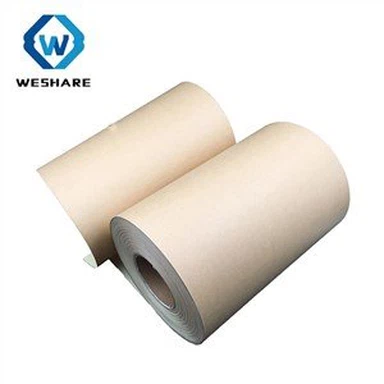
Mica Tape Production Process
Apr 10, 2026
Mica Tape Production Process: From Raw Materials to Finished Product
Quality Control at Every Step
Mica tape is a critical high-temperature insulating material for electrical equipment. With excellent heat resistance, flame retardancy, and insulation properties, it is widely used in wires and cables, new energy vehicles, rail transit, high-end household appliances, motors, and transformers. Ensuring stable performance-especially for applications above 150°C-requires standardized, precise processes and strict control at every production stage.
Raw Material Selection and Preprocessing: The Foundation of Quality
The main raw materials for mica tape are mica paper, high-temperature adhesives, and reinforcing substrates. Rigorous selection and preprocessing of these materials are essential to product performance.
Key steps include:
Grading, crushing, and peeling natural mica (muscovite and phlogopite) to remove impurities and substandard flakes, producing mica flakes with uniform thickness;
Converting mica flakes into mica paper with a thickness of 0.02–0.05 mm, free of holes and contaminants, and meeting insulation and tensile-strength requirements - this forms the core insulating substrate of mica tape;
Preparing reinforcing materials (such as alkali-free glass cloth and polyester film), cutting them to match the mica paper width, and removing surface lint;
Adjusting the viscosity of high-temperature adhesives (e.g., epoxy or silicone) to match different temperature-resistance grades (105°C, 155°C, 180°C), ensuring readiness for downstream processing.

Adhesive Formulation and Coating: Forming the Core Bonding Layer
Coating and adhesive application critically affect interlayer bonding strength and operational stability. Important practices include:
Formulation: Mix resin, curing agent, and any diluents according to the prescribed formula. Stir at room temperature for 20–30 minutes while monitoring viscosity and making fine adjustments to produce a smooth, particle-free adhesive mixture. Let the mixture rest for about 10 minutes to allow bubbles to dissipate and prevent pinhole defects during coating.
Coating: Uniformly apply the prepared adhesive to the reinforcing substrate using a knife-coating device. Adjust the knife gap to control adhesive volume and layer thickness, ensuring there are no missed spots, bubbles, or uneven areas.
Pre-curing and lamination: Feed the coated substrate into a hot-air drying oven for two-stage temperature-controlled drying for 5–8 minutes to reach a 30%–40% curing degree. Then synchronously convey and tightly bond the coated substrate with the mica paper to form a composite ready for shaping.

Composite Shaping and Curing
After coating and lamination, the wide-width mica mother rolls must be shaped and cured-typically using calendering or heat-assisted forming-to ensure tight layer adhesion, uniform thickness, and flatness. Process parameters should be optimized according to the adhesive system and sheet thickness to avoid delamination or warping.
Slitting and Rewinding: Adapting to Diverse Application Needs
Cured mother rolls cannot be used directly and must be slit into finished rolls of specified widths using high-precision slitting equipment, according to industry standards or customer requirements.
Key controls include:
Slitting speed typically maintained at 8–10 m/min to ensure cut quality;
Strict control of edge straightness to eliminate burrs and frayed edges;
Post-slit rewinding and finishing with dual inspection (machine and manual) to remove rolls with surface defects, out-of-spec dimensions, or substandard performance, guaranteeing uniform specifications and good appearance for every finished roll.
Comprehensive Quality Inspection: Final Gate Before Shipment
Quality inspection is a critical safeguard for mica tape performance and covers appearance, physical properties, electrical properties, and environmental compliance.
Typical test items include:
Product thickness and surface integrity (no holes or scratches);
Insulation resistance and dielectric strength;
High-temperature performance and verification of the rated temperature class (e.g., suitability for ≥150°C operation);
Environmental and safety indicators (low smoke, absence of harmful substances) to meet relevant compliance requirements. Only products that pass all tests proceed to packaging.
Conclusion
Finished mica tape combines excellent high-temperature resistance and insulating flame-retardant performance, making it a core material for electrical insulation and protection in applications such as high-voltage cables for new energy vehicles, stator winding insulation for large motors, transformer coil wrapping, and traction cable insulation for rail transit. From raw material selection through adhesive formulation, coating and lamination, slitting and rewinding, to rigorous quality testing, every production step must be tightly controlled. Maintaining high standards and strict process management ensures stable, reliable insulation solutions for downstream applications.