


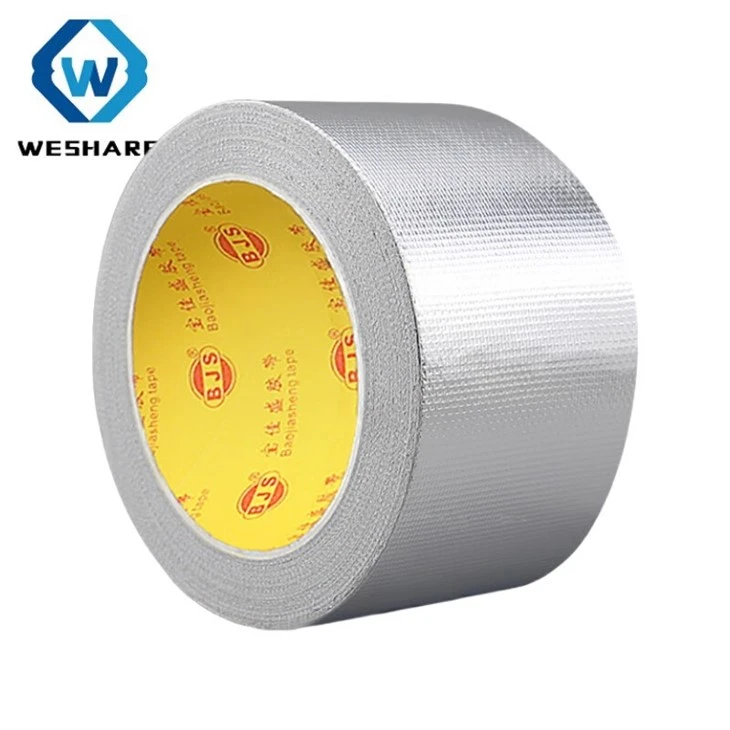
Aluminum Fiberglass Tape
Aluminum foil fiberglass tape is a composite insulation tape made of aluminum foil laminated to a woven fiberglass cloth backing with a high-temperature silicone pressure-sensitive adhesive. The aluminum layer reflects radiant heat, while the glass cloth carries the tensile load, resists tearing and provides dielectric strength. Supplied in roll form, it is specified for transformer and motor coil insulation, cable shielding and high-temperature heat protection.
- Fast Delievery
- Quality Assurance
- 24/7 Customer Service
Product Introduction
Products Description

Aluminum foil fiberglass tape, also known as aluminum glass cloth tape, is a three-layer composite tape: an aluminum foil facing, a woven fiberglass cloth carrier, and a pressure-sensitive adhesive coating. The aluminum foil reflects radiant heat and acts as a moisture and vapour barrier; the glass cloth provides tensile strength, tear resistance and dielectric strength; the adhesive holds the tape in place through repeated thermal cycling without flowing, oozing or carbonising.
It is the combination - not any single layer - that makes the product useful. A plain aluminum foil tape reflects heat but tears at the first pull and carries almost no tensile load. A plain glass cloth tape is strong and insulating but does not reflect heat. Aluminum foil fiberglass tape does both, which is why it is specified in Class H (180 °C) insulation systems and on equipment that runs hot continuously.
At Weshare the foil is laminated to the glass cloth under controlled tension and the adhesive is coated in-house to a specified weight. Thickness and peel strength are therefore consistent from roll to roll, not just on the first sample. Tapes are slitted to the customer's width and supplied either self-wound or on a release liner.
WHY CHOOSE US
Weshare has supplied industrial insulation materials to transformer, motor and cable manufacturers for more than 15 years. Aluminum foil fiberglass tape is one of our core lines, not an occasional item, so the foil, cloth and adhesive are held in stock and re-ordered on a fixed schedule rather than sourced per enquiry. In-house coating and slitting. Adhesive weight, foil thickness and slit width are controlled on our own lines. Every batch is tested for thickness, peel strength and tensile strength, and the test record is issued with the shipping documents. Consistency between batches. For customers running the tape on automated coil-winding or taping equipment, the critical requirement is that roll 500 behaves the same as roll 5. We hold the adhesive weight tolerance on your approved sample. OEM and ODM. Custom widths from 3 mm, custom roll lengths, printed cores and private-label packaging. Free samples of the standard grades are available once the specification is confirmed.

Product parameters
| Item | Specification |
|---|---|
| Base material | Woven fiberglass cloth |
| Foil | Aluminum foil, 0.03–0.08 mm |
| Adhesive | Silicone pressure-sensitive (standard); acrylic available for lower-temperature use |
| Total thickness | 0.12–0.20 mm |
| Peel strength (to steel, 180° peel) | 5–10 N/25 mm, silicone adhesive |
| Tensile strength (MD) | ≥ 250 N/25 mm |
| Elongation at break | 3–8 % |
| Continuous service temperature - silicone adhesive | −40 °C to +200 °C continuous, +260 °C short term |
| Continuous service temperature - acrylic adhesive | −20 °C to +120 °C |
| Flame behaviour | Glass cloth is non-combustible and self-extinguishing |
| Colour | Silver (aluminum facing) |
| Standard width | 25 / 50 / 100 mm; custom slitting from 3 mm |
| Standard roll length | 20 / 30 / 50 m |
| Core ID | 76 mm (3 in) |
| Liner | Optional PET release liner, or self-wound |
| Shelf life | 12 months at 20 °C / 50 % RH |
| Certifications | RoHS, REACH, ISO 9001:2015 |

Transformer and motor manufacturing
Coil wrapping and lead-out wire binding; inter-phase and inter-layer insulation barriers; shielding between the winding and the core; terminal protection. The silicone adhesive version is the correct choice for Class H (180 °C) systems.
Power cable and busbar
Heat-reflective and shielding layer on high-voltage cable harnesses; wrapping on busbar joints where a reflective barrier is required. Note that the aluminum layer is electrically conductive - do not use the tape where an exposed conductive surface is unacceptable.
HVAC ductwork
Vapour sealing and joint sealing on insulated duct; heat shielding on ductwork that passes close to hot equipment.
Automotive and engine bay
Exhaust and manifold heat wrapping; heat shielding of wiring looms and sensor cables; insulation of components adjacent to the engine block.
Household appliances
Thermal barrier on ovens, heaters, compressors and motors; cable harness insulation close to heating elements.
How to Choose the Right Glass Cloth Tape
The site now carries three products that buyers frequently confuse. Use this table in the body copy to separate them - it also protects against cannibalising your own keyword coverage.
| Aluminum Foil Fiberglass Tape | Glass Cloth Tape | Aluminum Foil Tape | |
|---|---|---|---|
| Structure | Aluminum foil + fiberglass cloth + adhesive | Fiberglass cloth + adhesive | Aluminum foil + adhesive |
| Reflects radiant heat | Yes | No | Yes |
| Tensile strength / tear resistance | High | High | Low |
| Dielectric strength | High | High | Low |
| Typical use | Transformer / motor coil, cable shielding, heat barrier | Coil binding, H-class insulation, battery wrapping, sandblasting protection | Duct sealing, vapour barrier, low-stress thermal reflection |
| Choose it when | You need heat reflection and mechanical strength in one tape | You need an insulating binding tape, heat reflection is not required | You need a reflective sealing tape on a flat, low-stress surface |

Processing


FAQ
Q: What is the difference between aluminum foil fiberglass tape and plain aluminum foil tape?
A: Aluminum foil tape is a foil with an adhesive and little else - it reflects heat but tears easily and carries almost no tensile load. Aluminum foil fiberglass tape laminates the foil onto a woven glass cloth, so it also resists tearing and provides dielectric strength. Use the plain foil tape for duct sealing; use the fiberglass-backed version where the tape has to survive vibration, winding tension or heat cycling.
Q: Which adhesive should I specify - silicone or acrylic?
A: Silicone for anything above roughly 120 °C, and for Class H (180 °C) insulation systems. Acrylic is cheaper and adequate for lower-temperature applications, but it will not hold a 260 °C short-term exposure. If you are not sure, send us the continuous and peak operating temperature of the equipment.
Q: What is the maximum service temperature?
A: With silicone adhesive, −40 °C to +200 °C continuous and up to +260 °C short term. The glass cloth and aluminum foil themselves withstand far more; the adhesive is the limiting layer, which is why the adhesive grade decides the temperature rating.
Q: Can the tape be supplied on a release liner?
A: Yes. We supply it self-wound or laminated to a PET release liner, depending on your converting or automated-taping process. Tell us which one your line uses.
Q: Can I get custom widths and roll lengths?
A: Yes. Slitting from 3 mm upward, roll lengths to your specification, printed cores and private-label packaging. MOQ is quoted per width - narrow slits carry a higher minimum.
Q: Do you provide samples and test reports?
A: Free samples of the standard grades are available once the specification is confirmed. Batch test records for thickness, peel strength and tensile strength are issued with the shipping documents.

our customer

certification
International certification
IEC certification: complies with international electrical equipment standards
ISO 9001 quality management system certification
UL certification: Complies with US UL certification to ensure product safety and quality.

Hot Tags: aluminum fiberglass tape, China, suppliers, wholesale, buy, price


