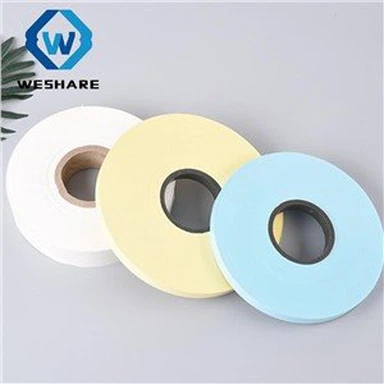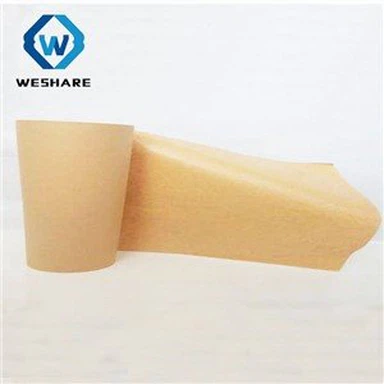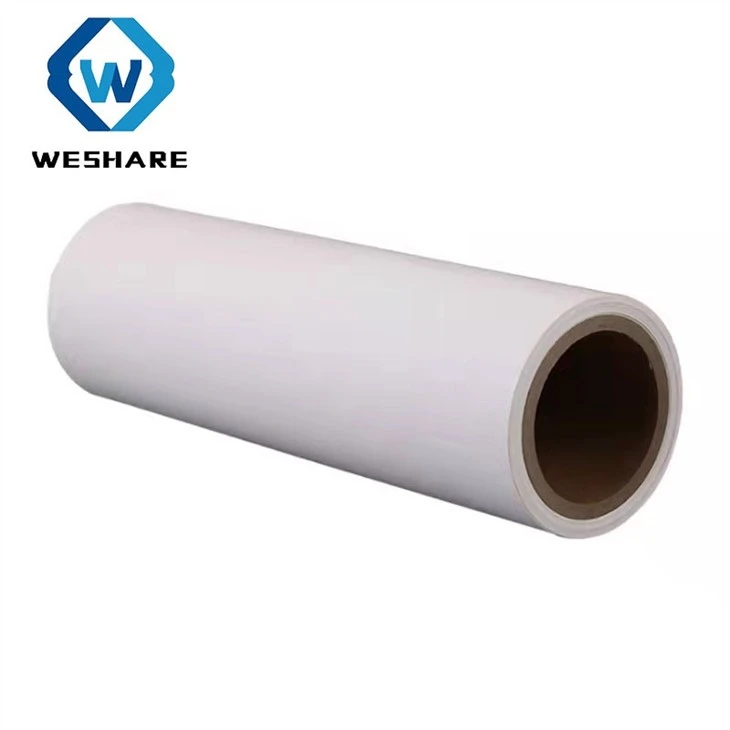
18mm White Release Paper For Envelop
An envelope release liner covers the self-adhesive strip on an envelope flap until the user is ready to seal it. It is peeled away and thrown out — so it has to be cheap, thin, and perfectly reliable. Our envelope release paper is a white woodfree base, coated with silicone on one side only. Coating on a single face keeps the liner free of cling on the reverse, so the liner leaves the roll cleanly and the reverse side stays printable. Grammages start at 35 gsm and are most commonly ordered at 40–45 gsm, with a nominal 18 mm slit width for standard flap seals.
- Fast Delievery
- Quality Assurance
- 24/7 Customer Service
Product Introduction
Products Description

Why envelope liners are specified by low grammage
| Constraint | What a thick liner does to you | What low grammage delivers |
|---|---|---|
| Postal cost | Adds weight to every mailpiece; postage is charged by weight band and by thickness | 35–50 gsm keeps the liner below the threshold that changes your mailing band |
| Mail thickness | A bulky liner makes the sealed flap stand proud, which can trigger thickness or machinability surcharges - and jams insertion equipment | A thin liner lies flush inside the fold |
| Flap fold | Thick paper resists the fold and can crack or lift the flap edge | Thin, flexible paper folds with the flap without springback |
| Cost per envelope | Liner is priced by area; heavier sheet means more fibre per mailpiece | Lowest possible fibre content per square metre |
| Machine runnability | A heavy liner is stiffer and needs higher tension; a light one must be engineered to survive at tension | Uniform, high-strength low-GSM sheet runs fast without breaks |
What low grammage costs you technically - and how we hold it
A 35–40 gsm sheet has roughly half the fibre of a 70 gsm label liner. That thinness creates four specific problems during silicone coating, and all four have to be engineered out:
| Challenge at low GSM | Why it matters for an envelope | How it is controlled |
|---|---|---|
| Silicone penetration | A thin sheet is more porous. If silicone sinks into the paper instead of sitting on the surface, release becomes weak and erratic - the flap pre-seals in the post | Dense, closed base sheet plus a controlled barrier; coat weight verified by stain test |
| Curl and lay-flat | Drying heat strips moisture from a thin sheet, which then curls. A curled liner will not feed on an envelope machine | Moisture content controlled through the coating and re-moisturising stages; lay-flat checked on the reel |
| Tensile and tear strength | The liner carries web tension through printing, slitting and the envelope line | Base paper selected for high internal strength at low weight; unslittable reels rejected at QC |
| Slitting a very thin web | Narrow strips from a light sheet tear easily and raise dust, which contaminates the adhesive | Sharp slitting, edge-dust control, and tension control at rewind |
| Release stability over time | An envelope may sit in storage for two years before use; release force must not drift | Complete silicone cure; release force and subsequent adhesion re-checked on aged samples |
Substrate options for envelope liners
| Substrate | Grammage | Why it is used | Watch-outs |
|---|---|---|---|
| White MF woodfree paper | 36 / 50 gsm | The industry standard: dense, smooth, closed surface; prints well on flexo and offset | Needs a well-controlled moisture profile to stay flat |
| Glassine | 40–60 gsm | Very dense and transparent-adjacent; excellent for high-speed envelope machines | Higher cost than MF woodfree |
| PE-coated low-GSM paper | 50–70 gsm | Adds a moisture barrier - for humid climates or long storage | Heavier, so used only where moisture is the real risk |
| PET / PP film | 23–50 µm | Tear-proof and moisture-proof; used on courier envelopes, mailing bags and document pouches where the liner must survive rough handling | Not recyclable with paper; higher cost |

Release force: the number that makes or breaks a self-seal envelope
An envelope liner must do two opposite things at once. It must hold - the flap adhesive must not peel the liner off during printing, folding, insertion, stacking, transport and postal handling. And it must release - the user must be able to strip it cleanly with a thumb, in one piece, without tearing the flap or leaving silicone or adhesive residue.
That is a narrow window, and it is why envelope liners are usually specified as light release. Typical specifiable range on our sticker/envelope release papers is below 3 gf/25mm up to 1000 gf/25mm, engineered to the customer's adhesive.
| Failure | What the user sees | Likely cause |
|---|---|---|
| Pre-release in transit | Liner has lifted or shifted before the envelope is used; flap sticks to the mailstack | Release force too low, or liner coating too thin / penetrated |
| Blocking on the reel | Liner will not unwind cleanly; the uncoated reverse clings | Coating applied to both sides, or wrong winding tension |
| Flap tears on opening | Seal separates but tears the paper flap | Release force too high, or liner too weak to carry the peel |
| Adhesive transfer | Sticky residue left on the flap after peeling | Incomplete silicone cure; silicone has migrated into the adhesive |
| Release drifts upward after storage | Envelopes that peeled easily at first become hard to open months later | Incomplete cure; verify with the subsequent adhesion (SAS) test |

Reverse-side printing in one or two colours
The liner is the one surface of a self-seal envelope that the recipient physically handles. Envelope makers use it to carry brand marks, sealing instructions, or a promotional message - and print buyers use it to add a security tint.
We print up to two colours in register on the reverse (uncoated) side of the liner. The uncoated face takes flexo and offset ink far more readily than a silicone surface, so print quality is stable. If your line needs registration marks for automated folding, tell us the mark position and we will hold it within the slitting tolerance.
Narrow-width slitting: 18 mm and up
Most envelope flap seals are between 12 mm and 25 mm wide, with 18 mm being the most frequently ordered strip. Slitting a 35–50 gsm web that narrow is where many suppliers lose quality:
Edge quality - a clean, dust-free edge matters because loose fibres migrate into the flap adhesive and cause sealing failures.
Width tolerance - strip width must be held tightly, or the strip wanders on the applicator and the flap is only partly covered.
Winding tension - too tight and a thin liner stretches or blocks; too loose and the reel telescopes.
Splice control - a splice in a narrow envelope strip is more disruptive than in a wide label web; tell us your maximum splices per reel.
Moisture, curl and lay-flat
Moisture is the enemy of a thin envelope liner. Wrapped in a stack of paper in a humid warehouse, an unprotected 35 gsm liner takes on moisture, grows, and curls - and then it will not feed. Worse, a liner that has picked up moisture can lose release performance and pre-seal.
Three controls keep this in check:
Moisture content at delivery held in a defined range 【待工厂提供】.
Moisture-proof packaging - carton plus PE-wrapped, palletised reels.
Storage guidance for the buyer - keep in the original wrap, in a dry room, off the floor, and use in rotation.
Specifications and customization
| Item | Standard | Customization |
|---|---|---|
| Base | White MF woodfree / glassine | White or coloured |
| Grammage | From 35 gsm; 40–45 gsm stocked | 50–70 gsm for heavy flaps |
| Silicone coating | Single side | Solvent-free, solvent, or emission-free systems |
| Release force | Light release | <3 gf/25mm to 1000 gf/25mm, engineered to your adhesive |
| Width | 18 mm standard strip | Any slit width from 18 mm to full jumbo |
| Reverse printing | - | 1–2 colours, register |

FAQ
Q1. What is the standard grammage for an envelope release liner?
Envelope liners are the thinnest release papers in production. The market starts at 35 gsm and the classic sizes are 36 gsm and 50 gsm. We commonly supply 40–45 gsm for standard self-seal envelope flaps.
Q2. Why not use a heavier 70 gsm liner?
Because the liner is discarded after one use. A heavier sheet adds weight and thickness to every mailpiece - which can move you into a higher postage or mail-thickness band - and it makes the sealed flap stiffer and bulkier. Low grammage is the correct design, not a cost shortcut.
Q3. Is the liner coated on both sides?
No. Envelope liners are coated on one side only. The reverse side must stay free of silicone so the liner does not cling to itself on the reel, and so it can be printed.
Q4. What release force should an envelope liner have?
Light release. It must hold through printing, folding and postal handling, then peel cleanly by hand. On our release papers the specifiable range is below 3 gf/25mm up to 1000 gf/25mm, engineered to your adhesive. Describe your failure mode - pre-release, blocking, or flap tearing - and we will work back to the target.
Q5. Can you print on the reverse of the liner?
Yes, up to two colours in register on the uncoated reverse side - brand marks, sealing instructions or registration marks.
Q6. What is the narrowest strip width you can supply? 18 mm is our standard envelope strip; we slit to any width you run. Width tolerance and maximum splices per reel are agreed with the order.
Q7. Will a 35–40 gsm liner survive a high-speed envelope machine? That is precisely the engineering problem. The base sheet is selected for internal strength at low weight, and reels that cannot hold tension are rejected at QC. Give us your machine speed and web tension so we can match the grade.
Q8. Do you supply low-GSM liner for mailing bags and courier envelopes?
Yes. Mailing bags carry heavier contents and are handled more roughly, so we recommend a wider strip and, where moisture or tearing is a risk, a PET or PP film liner. See our release paper liner for envelope bags.
Q9. How long can the liner be stored without release drifting?
With the original moisture-proof wrap and dry storage, we specify a shelf life of two years. Release force is re-checked on aged samples.

Hot Tags: 18mm white release paper for envelop, China, suppliers, wholesale, buy, price, Yellow Sticker Release Paper