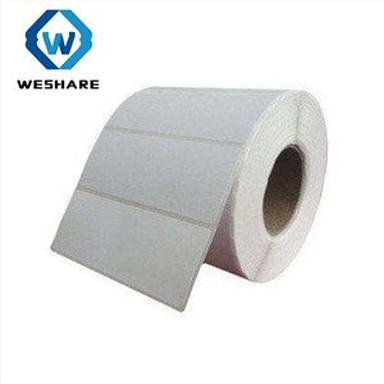
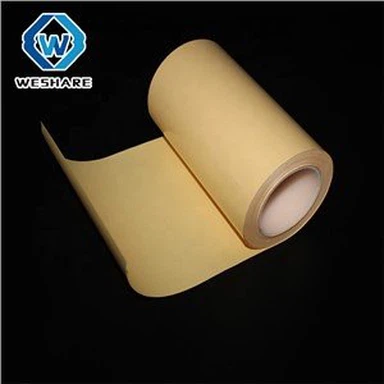
Silicon Coated Release Paper Roll
A silicone coated release paper roll is a base paper coated on one or both sides with a silicone release layer. It does not carry the adhesive — it protects it, and then lets it go at exactly the right moment. Most sourcing conversations about release paper rolls are not about the paper. They are about the roll: how wide it is cut, what core it runs on, how many metres are on it, and how many splices you will meet. Specify those five things correctly and the paper will run. Get them wrong and the best paper in the world will still stop your line. This page covers what you actually need to specify — and what we can hold to.
- Fast Delievery
- Quality Assurance
- 24/7 Customer Service
Product Introduction
Products Description
What Is a Silicone Coated Release Paper Roll?
A silicone coated release paper roll is a web of base paper finished with a silicone coating whose only job is controlled release. It is the carrier that protects a pressure-sensitive adhesive during coating, drying, slitting, storage and shipping - and then releases cleanly when your customer peels it.
Three things define a release paper roll, and only three:
The base paper - glassine, CCK, SCK, PE-laminated kraft or MG kraft.
The coating system - solvent-based or solvent-free silicone, single or double sided, and the coat weight applied.
The roll format - slit width, core, roll diameter, roll length and splice count.
Everything else on a datasheet is a consequence of those three. So we will start there.

Start Here: Specify These Five Things First
| # | What to specify | Why it matters | Typical question we get |
|---|---|---|---|
| 1 | Slit width + tolerance | Decides waste on your web and whether your guider can track it | "Can you hold ±1 mm?" |
| 2 | Core inner diameter | Must match your unwind shaft - 3 in / 76 mm is the industry standard | "Is it 76 mm or 3 in?" |
| 3 | Roll diameter | Larger rolls = fewer changeovers, but must fit your unwind geometry | "Can we take 450 mm rolls?" |
| 4 | Roll length (metres) | Drives changeover frequency and price per m² | "How many metres per roll?" |
| 5 | Splice count / roll | Every splice is a potential line stop and a potential defect | "Max splices per roll?" |
If you can tell us these five plus the base paper and the release force you need, we can quote a roll rather than a paper grade.
Choosing the Base Paper Behind the Silicone Coating
The base paper decides how much silicone you need, how smooth the release is, and how the roll behaves under tension. These are typical industry grammage bands - replace with our own stock list once confirmed.
| Base paper | Typical grammage | Surface character | Best suited to |
|---|---|---|---|
| Glassine | 60–90 gsm | Dense, highly calendered | Labels, high-speed die-cutting, tight release |
| CCK (clay coated kraft) | 80–120 gsm | Clay coated, very smooth | Labels, tight release, printed liners |
| SCK (super calendered kraft) | 60–100 gsm | Super calendered | Labels, tapes |
| PE-laminated kraft | 80–150 gsm total | PE film layer on kraft | Moisture-barrier requirements |
| MG / kraft | 60–120 gsm | Machine glazed | Masking, general protective use |
Two practical notes:
A denser surface holds silicone better, which usually means a lower coat weight for the same release level. If your quote looks expensive, ask whether a denser base paper would let us reduce coat weight.
PE-laminated liners are not automatically better. They add moisture resistance but also add thickness, cost and a plastic layer. If your product is not moisture-sensitive, a paper liner is usually the better commercial answer.
Release Force: Matching the Peel Level to Your Adhesive
Release force is the single most misunderstood number in a release paper enquiry. It is not a quality score - it is a matching decision. Too easy and the liner falls off during converting; too tight and the end user fights the label, or the adhesive is pulled off the face material.
Release force is measured by peeling a standard test tape off the liner at 180° and 300 mm/min. The reference bands below are widely used in the industry
| Grade | Reference peel force (180°, gf/25 mm) | Typical use |
|---|---|---|
| Ultra-easy | under 5 | Very low-tack, delicate films |
| Easy | 5–10 | Low-tack adhesives, films |
| Standard | 8–15 | General label stock |
| Medium | 10–30 | Standard self-adhesive labels |
| Tight | 35–50 | High-speed converting, small die-cut labels |
| Very tight | 50 and above | Demanding converting, high-speed lines |

Custom Slitting: Width, Tolerance, Core and Roll Diameter
This is where most release paper orders go wrong - and where we can be most specific.
Mother roll width up to 2500 mm. We slit from our own jumbo rolls, so a custom slit width does not require a new base paper order.
Slit tolerance. Standard cuts hold ±1 mm . If your web is narrower than 50 mm, tolerance is the first thing to agree in writing - a 40 mm ±1 mm roll is a 2.5% variance, which matters on a guider.
Core. 76 mm (3 in) inner diameter as standard. Confirm your unwind shaft before ordering; adapters exist but add run-out.
Roll diameter. 350–450 mm is our standard band. Larger rolls reduce changeovers but increase the risk of core crush and of the roll not fitting your unwind geometry.
Cut quality. Slitting must be clean-edged. A ragged edge sheds paper dust that ends up in your adhesive station - ask for a sample roll and check the edge under a light.

Application Guide: Which Spec Fits Which Product
| End product | Suggested base paper | Release force | Typical slit width | Note |
|---|---|---|---|---|
| Self-adhesive labels | Glassine / CCK | Standard–Tight | on press width | denser base holds silicone better |
| Double-sided & foam tape | Glassine / SCK | Easy–Standard | on line width | check silicone transfer on thick adhesives |
| Protective film (PE/PET) | Glassine / PE-laminated | Easy | 40 mm narrow cuts common | surface of liner affects final haze |
| Sanitary napkin / diaper | Glassine, low grammage | Easy–Standard | narrow strips | see positioning note in Part 0 |
| General masking / packing | MG kraft | Easy | wide | / |
Storage, Shelf Life and Handling
Release paper is a coated product; it does not improve with time.
Shelf life. Widespread industry practice for silicone-coated liner material is in the region of 12-24 months under correct storage .
Conditions. Store in a dry, ventilated area, out of direct sunlight. A commonly specified envelope is 16–27 °C and 40–75% RH; if you store in a humid warehouse, a PE-laminated liner may be worth the extra cost.
Handling. Keep rolls upright on their cores, do not stack flat, and avoid core crush - a crushed core causes run-out on your unwind.
Re-test after long storage. Release force can drift. If a roll has been in your warehouse for a long time, re-test before committing to a full production run.
Why Weshare
Release liner and coated paper production in Zhejiang since 2005, with 4 hot-melt coating lines, 1 adhesive coating line and 2 coated-paper and silicone coating lines.
Release liner paper supply up to 2500 mm wide - custom slit widths without a new base paper order.
Our own lab as the R&D base; retained samples held for 2 years on every order; a test report with every shipment.
We cooperate with leading paper mills in China and use imported Japanese base paper alongside domestic high-grade paper for single- and double-sided silicone coating.

Hot Tags: silicon coated release paper roll, China, suppliers, wholesale, buy, price, Yellow Sticker Release Paper