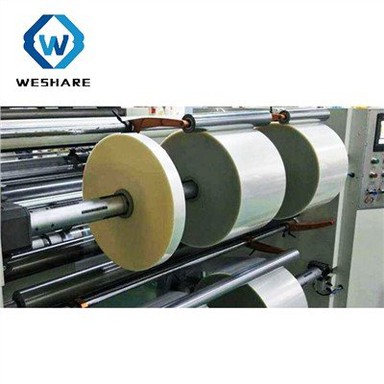
Summary of common problems and solutions for protective film slitting and rewinding
Nov 11, 2024

The Purpose of Slitting Protective Film
The overall purpose of slitting protective film is to:
Provide precise specifications according to customer requirements.
Inspect the quality of large composite rolls from the previous extrusion process during the slitting and rewinding stage to identify any potential issues.
Correct misalignment or eliminate defects in printing and composite layers, improving the overall quality grade of the product.
Ensure a proper winding condition for the finished product.
Common Problems and Solutions in Film Slitting
1. Poor Edge Uniformity of Slit Film Rolls
There are three main reasons that can cause this issue:
Reason 1: Inaccurate photoelectric tracking during slitting.
Solution:
Adjust the photoelectric eye settings and ensure the correct working state, following the operating procedures.
If the color contrast of the tracking line is insufficient, increase the color contrast for better detection.
Reason 2: Low rewinding tension.
Solution:
Increase the rewinding tension. If necessary, add the appropriate amount of new magnetic powder to the magnetic powder clutch.
Reason 3: Static accumulation on the film, causing sticking or shifting.
Solution:
Install anti-static equipment on the slitting machine and ensure that one of the electrodes makes contact with the backside of the film roll.
2. How Are Longitudinal Stripes Formed on the Film Surface?
Longitudinal stripes refer to the ring-shaped lines that appear on the surface of the film rolls. These stripes are caused by:
1. Air entrapment and inconsistent thickness tolerance during the slitting or rewinding process. This is the main cause of longitudinal stripes. When the stripes are severe, it is difficult to eliminate them. One contributing factor is slitting at high speeds, which often leads to both longitudinal stripes and layer misalignment issues.
2. Equipment precision:
For high-precision equipment, after prolonged continuous use, some components may experience a decline in operational accuracy. This is especially true for large slitting machines, where maintaining precision becomes more difficult. Additionally, due to the thin and flexible nature of plastic films, they are more susceptible to damage during processing. Therefore, it is important to replace parts with durable and highly precise components. Ensure proper installation to maintain the equipment's operational accuracy.
3. Why Do Wrinkles Appear at the Bottom of the Film Roll?
Bottom wrinkles generally occur in the initial section of the film roll and are characterized by deep, numerous wrinkles and lines. The causes include:
1. Process parameters:
Different types of slitting machines have varying methods and settings for process parameters. The performance of the equipment itself and the intrinsic properties of the film significantly affect the quality of slitting and rewinding. However, proper process adjustments can improve issues like longitudinal stripes and bottom wrinkles.
2. Suitable slitting process:
The appropriate slitting process must be adopted for different machines and film types. Changes in the equipment's condition can be compensated for by adjusting the process, but these adjustments must be made carefully.
The quality of slitting and rewinding largely depends on both the film properties and the equipment's performance. By adjusting the process parameters and maintaining equipment precision, issues such as longitudinal stripes, bottom wrinkles, and edge defects can be mitigated.