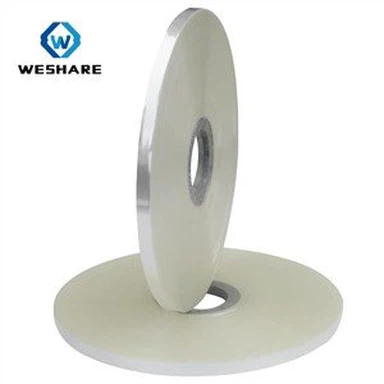
Application of PET silicone protective film and analysis of causes of warping
Jan 17, 2024
PET Protective Film: Characteristics and Applications
PET protective film is one of the most commonly used protective films on the market today. Its key characteristics include:
Excellent Transparency and Smoothness
PET film offers high clarity and a smooth surface, providing a great visual effect.
Non-toxic and Hygienic
It is safe for use, with good hygienic properties.
Good Thermoforming Performance
It performs similarly to standard PVC sheet material and can be vacuum-formed into high-performance PET thermoformed products. PET film is considered an ideal packaging material that meets environmental protection requirements.
Superior Surface Decoration
PET film can be printed directly without surface treatment, easily embossed, and can undergo metalization (vacuum coating with a metal layer).
Conductive Polymer Coating
PET film can be coated with high-molecular conductive polymers, which lower surface resistivity, ensuring stable performance that is unaffected by environmental temperature and humidity.
Good Mechanical Strength
PET film exhibits excellent mechanical strength.
Excellent Chemical Resistance
It can withstand the corrosion of various chemicals.
Eco-friendly and Recyclable
PET film is environmentally friendly and can be economically and conveniently recycled. When incinerated, it does not release harmful substances that impact the environment.
Oxygen and Moisture Barrier
PET film provides effective barriers against oxygen and water vapor.
Product Features:
High light transmission, strong weather resistance, low adhesion, easy to peel without leaving residue, and high-temperature resistance.
Applications and Uses of PET Protective Film by Thickness
PET protective film is widely used in the electronics industry, and the required film thickness varies depending on the application. Common PET film thicknesses range from 30μm to 150μm.
30μm PET Protective Film
Thin yet highly resistant to shear force, with excellent adhesion, anti-aging, and UV resistance properties. It is commonly used for LCD screens and nameplates.
50μm-60μm PET Protective Film
Lightweight but maintains good adhesion. It is mainly used for nameplates, earphone microphone attachments, digital camera reflective films, LCD reflective panels, and mobile phone keyframes.
80μm PET Protective Film
Exhibits excellent adhesion at room temperature, suitable for smooth polar surfaces. It is commonly used for fixing LCD frames, digital camera buttons, hard materials, and the assembly of LCD front covers and panels.
100μm PET Protective Film
Offers excellent adhesive strength for smooth surfaces, primarily used for securing LCD backlight assemblies and frames.
125μm PET Protective Film
Excellent all-around performance, providing superior adhesion to most materials and excellent shear resistance and temperature tolerance. Commonly used for securing windows, lenses, digital camera LCD modules, and LCD backlight assemblies.
150μm PET Protective Film
Maintains strong adhesion under both high and low temperatures, ideal for EPDM seals, and offers excellent resistance to CaCO3 (calcium carbonate).
Causes and Control of PET Silicone Protective Film Warping
During production, PET silicone protective films may warp due to various factors related to processing. To control warping, it's essential to understand the underlying causes. Below are some factors that can lead to warping:
Material Differences
If the adhesive layer and substrate materials differ, controlling warping becomes difficult. High tension may not improve this, and customers typically don't require tight warping tolerances.
Tension Issues
For materials of the same type with minimal thickness variation, warping can be controlled by adjusting tension. It's a simple process, but keep in mind that tension in the drying box should not be too low, as this may lead to misalignment or air bubbles.
Film Permeability and Pathways
The permeability and pathways of the film can affect the magnitude and direction of warping. Adjusting the entry and exit angles of the film before and after the laminating rollers can alter the warping. This is a common adjustment method, but some machines lack tension adjustment rollers, which may require modifications.
Substrate Tension
Variations in substrate tension may cause uneven warping on the finished product's top and bottom surfaces. If this happens, the only solution is to replace the substrate.
Uneven Pressure from Laminating Rollers
If the pressure from the top and bottom rollers is inconsistent, it can result in warping on the edges of the finished product. This issue can be addressed by adjusting the air pressure of the cylinders.