Main factors and test methods for the viscosity of textured protective film
Dec 09, 2024
Net-Pattern Protective Film

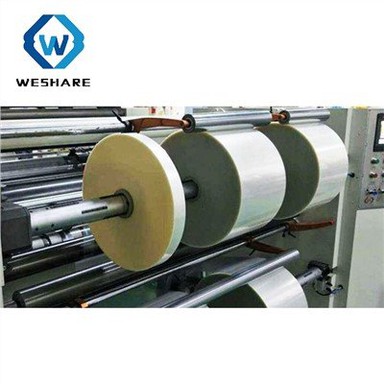
The net-pattern protective film is made from a polyethylene mesh plastic film as the base material, with cross-linked acrylic resin as the adhesive, and several special additives for formulation.
It comes in thicknesses of 0.05mm, with various adhesive strengths such as mild, low, medium, and high tack. Available in ordinary and anti-static types, the film comes in transparent, red, blue, and other colors. Different models with varying adhesive strengths and specifications are available depending on the type of material to be protected.
Key Features of Net-Pattern Protective Film:
Excellent Chemical Resistance: The film offers strong protection against chemical corrosion, air permeability, and adhesion, making it ideal for surface protection of various products.
Breathability: The net-pattern surface provides better breathability compared to smooth films, reducing the chances of air bubbles forming during application, resulting in a cleaner, more aesthetically pleasing finish.
Applications of Net-Pattern Protective Film:
Stainless Steel Sheets: Mirror-finished steel, matte steel, colored steel, and hardware protection.
Aluminum Materials: Aluminum plates, coarse-textured aluminum plates, aluminum profiles, matte spray aluminum profiles, electroplated aluminum profiles, and anodized aluminum profiles.
Electronics and Appliances: Light guides, electronic screens, instrument surfaces, automotive displays, casings, air conditioner surfaces, and various home appliance surface protection.
Plastic Sheets: Acrylic sheets, PVC glossy boards, ABS glossy boards, plastic sheets, plastic casings, and protection during various die-cutting processes.
Factors Affecting Adhesive Strength of Net-Pattern Protective Film:
Wettability: The pressure-sensitive adhesive can only form a strong bond if it has good wettability with the surface of the material to ensure physical and chemical interaction.
Molecular Movement and Diffusion: Pressure-sensitive adhesive molecules migrate to the surface of the material. When the distance between the adhesive and the material is less than 5Å, they form a bond through physical and chemical interactions.
Penetration: The adhesive layer flows under pressure to penetrate grooves and voids, increasing the contact area and creating a mechanical bond with the material.
Testing Method for Net-Pattern Protective Film:
Surface Cleanliness: Check the test board surface to ensure it is smooth and clean. If scratches occur during frequent use, replace the board surface.
Alcohol Cleaning: Use cotton paper soaked in alcohol to clean the surface of the test board. Wait for it to dry and repeat the cleaning process 3-5 times. Dry with a clean cotton cloth.
Sample Preparation: Remove the outer three layers of the protective film, cut a 25mm wide and 400mm long piece along the adhesive coating direction.
Adhesion Test: Align one end of the sample with the test board and apply the adhesive side down in the center. Use a roller to apply pressure at a speed of 300mm/min for a smooth adhesion, ensuring no air bubbles.
Peel Test: After allowing the sample to settle for 20 minutes, fold the remaining part of the film back by 180° and peel it off by 10mm. Use a peel force tester to measure the force required for separation at a speed of 300±30mm/min, recording results three times at 50mm intervals.
Storage Conditions for Net-Pattern Protective Film:
Ideal Temperature: Store between 22-28°C with 50%-70% relative humidity.
Avoid Direct Sunlight: Do not store in high temperatures (above 40°C) or high humidity conditions (over 70% RH).
Shelf Life: It is recommended to use the product within six months of manufacture.
Surface Condition: Ensure that the surface of the item to be bonded is dry, clean, and free from oil or grease before applying the protective film.
General Application Guidelines:
Storage: Keep the product in a well-maintained environment at normal temperature and humidity, avoiding excessive stretching during application to prevent the film from lifting at the edges.