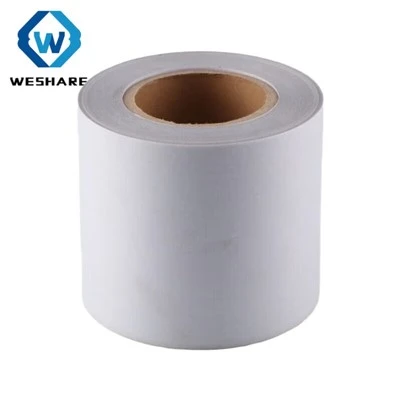
Use of release film in medical consumables
Nov 25, 2025

1. What Is Medical-Grade Release Film?
Medical-release film is a silicone-coated PET, PE, or PP film used as a temporary carrier or protective layer during the manufacturing and packaging of medical consumables. It allows adhesive surfaces or functional coatings to be protected and later removed smoothly without residue.
Compared with industrial release film, medical-grade products must meet stricter standards:
Low extractables and low migration
Chemically stable silicone coating
High cleanliness (low particle levels)
Compatibility with sterilization methods (ETO, gamma, steam)
Often ISO 10993 biocompatibility testing is required for certain applications
These requirements ensure patient safety, manufacturing reliability, and long-term storage stability.
2. Key Applications of Release Film in Medical Consumables
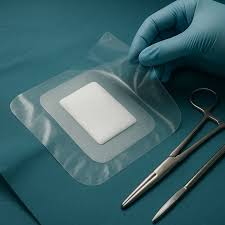
- Wound Dressings & Hydrogel Products
Medical release film protects the adhesive hydrogel layer during:
Coating
Slitting
Packaging
Hydrogel dressings typically require release forces between 10–35 g/25mm, ensuring the dressing can be removed without damaging the gel structure. Films must also withstand sterilization temperatures and maintain a smooth surface to avoid pattern transfer onto the hydrogel.
- Medical Adhesive Tapes & Surgical Patches
Release film controls the peel strength and ensures adhesive stability over shelf life.
Common uses include:
Surgical tapes
Fixation patches
Ostomy adhesive parts
Transdermal patches
Medical companies typically specify a release force tolerance of ±10–15%, as fluctuations may cause over-bonding or premature lifting.
- Catheter, Syringe & Injection Device Components
Certain disposable devices require release liners for:
Lubrication coatings
Needle protection
Sliding mechanisms
High-temperature silicone release films are preferred because some components must withstand ETO sterilization (up to 55°C) without coating degradation.
- Diagnostic & Laboratory Consumables
In lateral-flow tests (rapid tests), microfluidic chips, and diagnostic cards, release films serve as:
Carrier films during assembly
Protective liners for adhesive strips
Temporary bonding layers for precision placement
PET release film is widely used because of its dimensional stability and low shrinkage (<1.5%).
- Medical Packaging
Peelable packaging often requires a release layer to allow:
Easy opening
Sterility integrity
Long-term storage without adhesion changes
PE release films with low-migration silicone are commonly used in sterile barrier systems.
3. Technical Requirements: What Really Matters to Buyers
Medical buyers care about stability and safety far more than price. Below are the core parameters procurement teams must consider.
- Cleanliness (Particle Control)
Particles can compromise sterile products.
Medical release films are typically produced in environments with:
Class 1000–10000 cleanrooms
Online dust monitoring
Ionized air treatment
Low dust reduces rejection rates in adhesive medical products.
- Release Force Stability
Medical adhesives are sensitive. Release force must remain stable for 12–24 months, even after sterilization and transport.
Important parameters:
Initial release force
Aged release force (after 70°C × 7 days testing)
Force drift after sterilization
Silicone transfer rate (should be extremely low)
- Chemical Safety
Medical-grade silicone systems must have:
Low extractables
No abnormal odor
High curing completeness
Reliable bonding to the base film
For hydrogel applications, poor curing may lead to silicone migration into the gel, causing adhesion failure.
- Dimensional Stability
PET film is preferred for processes requiring:
Precision die-cutting
Laser cutting
Automatic laminating
Thickness tolerance typically falls within ±2–5 μm.
- Sterilization Compatibility
Different products require different sterilization methods:
| Sterilization Type | Temperature | Release Film Requirement |
|---|---|---|
| ETO | 40–55°C | No silicone discoloration or odor |
| Gamma | Up to 25–40 kGy | Silicone must withstand radiation |
| Steam | 121°C | Mostly PET required; PE may shrink |
Buyers must ensure compatibility before mass production.
4. Practical Advice for Procurement Teams
- Evaluate Release Force Curves, Not Just a Single Value
Reliable suppliers provide:
Initial force
Aged force
Heat resistance
Repeated peeling force
This gives a complete picture of performance consistency.
- Check Packaging Quality
Because humidity and dust can ruin medical adhesives, look for:
Vacuum-sealed inner packaging
Double-layer moisture-proof bags
Desiccant + humidity indicator
Cleanroom-grade carton boxes
This is especially crucial when shipping to tropical countries such as Brazil.
- Confirm Certifications and Traceability
Medical consumables may require:
ISO 13485 for related components
Material batch tracking
REACH and RoHS (commonly requested for global trade)
MSDS for silicone coating systems
Even when the release film does not directly contact the patient, traceability is a key requirement for global manufacturers.