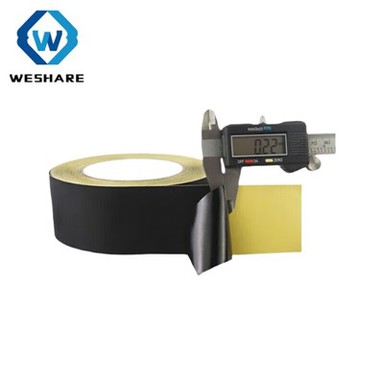
Precautions for Transporting and Storing Release Film: Avoid Static Electricity, Indentations, and Roll Deformation
Nov 25, 2025
Release film plays a critical role in industries such as electronics, lithium battery manufacturing, adhesive tape production, and precision die-cutting. Although it looks simple, the material is extremely sensitive to environmental conditions and mechanical stress. Improper transportation or storage may lead to static buildup, surface dents, and roll deformation-issues that directly impact production stability and product yield.
Many buyers in Brazil and other emerging markets have reported unstable release force, wrinkling during unwinding, or unexpected silicone transfer. In most cases, the root cause is not the release film itself, but handling and storage conditions.
1. Prevent Static Electricity: Essential for High-Precision Applications
Release films-especially PET and BOPP types-are highly sensitive to static electricity. During transportation and storage, friction between rolls or with packaging can generate static charges reaching 2,000–5,000V. This may cause:
Dust attraction, leading to spots or bubbles during lamination
Difficulty in unwinding
Micro-arcing that damages silicone coating
Foreign particle contamination in electronics or battery processes
Recommended precautions
Use anti-static packaging bags or PE wrapping with static-dissipative additives.
Keep humidity between 45–65% during storage. Low humidity dramatically increases static buildup.
Ensure grounded pallets and metal shelves when storing multiple rolls.
Avoid sliding rolls across the floor or conveyor surfaces.
For cleanroom applications, apply an ionizing air blower during material conversion.
These measures are especially important for die-cutting factories and adhesive manufacturers that require stable release force below 20g.
2. Avoid Indentations: Protect Surface Smoothness and Coating Integrity
Indentation (also called pressure marks) is one of the most common complaints from adhesive tape factories. Once the film surface is damaged, the release force becomes unstable, and the tape surface may show uneven texture.
Indentations usually occur when:
Rolls are stacked too high during storage
Heavy items press against the roll surface
Transportation vibration causes localized pressure
Straps are too tight during pallet reinforcement
Even a 0.1 mm surface dent may cause coating separation during high-speed coating or laminating.
How to prevent indentations
Do not stack rolls horizontally. Vertical placement reduces point-loading pressure.
For large rolls above 250 kg, use double-layer cushioning (foam + corrugated board).
Avoid placing sharp or heavy tools near the roll surface.
During palletizing, tighten straps moderately-just enough to stabilize, not deform.
During container loading, keep at least 15–20 cm buffering space from walls to avoid vibration damage.
A well-protected roll ensures stable coating thickness, smooth unwinding, and consistent product performance.
3. Prevent Roll Deformation: Maintain Structure and Tension Stability
Roll deformation-or "ovality"-is a hidden but serious issue. Once the inner core or the roll body becomes deformed, the film may unwind unevenly, resulting in wrinkles, telescoping, or inconsistent release force.
Common causes
Long-term horizontal placement
Exposure to temperatures above 30–35°C, especially in containers
Long-distance transportation without shock absorption
Storing rolls near heat sources
Core deformation due to improper loading
Brazil and many South American countries have hot and humid climates, making deformation control even more critical.
Prevention measures
Always store release film vertically with full-width support to protect the roll structure.
Keep storage temperature 18–28°C and avoid direct sunlight.
Use thick paper cores or plastic cores for long-distance shipping.
Add corner protectors and load locks to prevent movement inside containers.
If rolls must be stored for over 60–90 days, rotate them every 30 days to balance internal tension.
Properly handled rolls maintain consistent tension and significantly reduce unwinding defects during production.
4. Recommended Storage Conditions (Suitable for Brazil & Tropical Regions)
| Parameter | Recommended Value |
|---|---|
| Temperature | 18–28°C |
| Humidity | 45–65% RH |
| Light exposure | Avoid direct sunlight |
| Stacking method | Vertical only |
| Maximum storage period | Within 6 months for best performance |
| Cleanliness | Non-dusty, dry environment |
| Floor condition | Must be flat and free from moisture |
Following these guidelines reduces the risk of silicone transfer, wrinkles, and unstable release force.
5. Why These Precautions Matter for B2B Buyers
For factories using release film in laminating, die-cutting, EV battery production, protective film manufacturing, and adhesive tape coating, materials must maintain:
Stable release force
Uniform coating
Smooth unwinding
Minimal dust and deformation
Even minor handling issues may increase defect rates, slow down production, or cause coating line shutdowns.
Proper storage and transportation do more than protect the product-they protect your production cost, delivery schedule, and overall yield.
Transporting and storing release film is far more important than many buyers realize. Proper control of static electricity, indentation risk, and roll deformation ensures that your production line runs smoothly and your finished products meet customer standards.
By following the precautions above, B2B buyers-especially in tropical regions such as Brazil-can significantly reduce waste, stabilize release force, and extend material shelf life.
If you need technical guidance, customized packaging, or stable long-term supply, feel free to contact us.
We are always ready to support your production needs.