


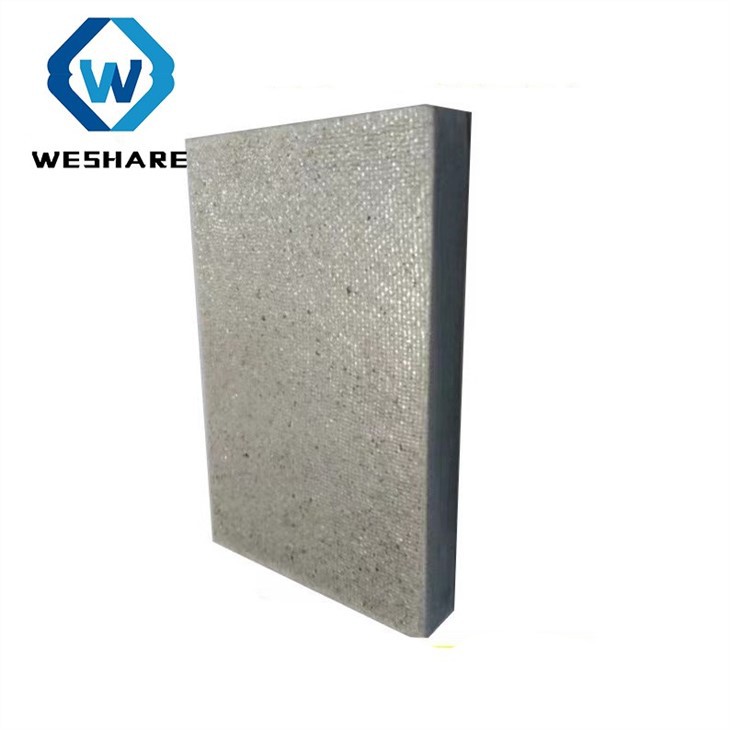

Muscovite Mica Sheets
Muscovite Mica Sheet for Steel and Aluminium Melting Furnaces Mica is one of the few materials that combines high-temperature resistance, electrical insulation and compressibility in a single sheet — which is why it has been the standard lining material in metal melting for decades. In a steel or aluminium melting shop, mica sheet is used as the slip plane and coil insulation in coreless induction furnaces, as wrapping for crucible forms, and as a protective barrier during sintering of the lining material. This page covers that application: which mica to use, at what temperature, in which form, and how to specify it. For mica sheet used as general electrical insulation in motors, switchgear and appliances, see Insulation Mica Sheet. For the higher-temperature mica material, see Phlogopite Mica Sheet. Material: muscovite mica paper, ≥ 90 % mica content, silicone-resin bonded Continuous temperature: 500 °C · Intermittent: 800 °C Dielectric strength: > 20 kV/mm Forms: flexible sheet · rigid sheet · slip-plane roll (glass-fibre and ceramic-fibre reinforced, 800 – 1200 °C) Fabrication: cut, punched, drilled, milled and CNC-machined to drawing
- Fast Delievery
- Quality Assurance
- 24/7 Customer Service
Product Introduction

Where Mica Goes in a Melting Furnace
Mica appears at four points in a coreless induction furnace and one common point in the wider melting shop:
| Position | Function | Material |
|---|---|---|
| 1. Slip plane between the working lining and the coil | Lets the lining expand and contract thermally without cracking; insulates the lining from the coil | Mica sheet or reinforced slip-plane roll |
| 2. Coil insulation | Electrically isolates the induction coil | Mica sheet / roll |
| 3. Crucible form wrapping | Separates the crucible form from the lining during construction | Cold-formable mica roll |
| 4. Barrier during lining sintering | Protects surrounding components while the lining is sintered in place | Mica sheet / roll |
| 5. Furnace and heat-treatment insulation | Thermal barriers, inspection and sight-glass frames, covers and shields in furnaces and annealing equipment | Rigid or flexible mica sheet |
What the slip plane actually does. The refractory lining expands when the furnace heats and contracts when it cools. If it is rigidly restrained against the coil, that movement turns into stress, and the lining cracks. The mica layer is compressible and slides, so the lining moves without failing. It is a low-cost part that prevents a very expensive failure - a cracked lining means an unplanned reline.
Muscovite or Phlogopite? Choose on the Working Temperature
| Muscovite (white mica) | Phlogopite (gold mica) | |
|---|---|---|
| Dielectric strength | Higher | Slightly lower |
| Continuous temperature | 500 °C | 700 °C |
| Intermittent temperature | 800 °C | 1000 °C |
| Colour | White / translucent | Amber / gold |
| Choose it when | Electrical insulation is the primary requirement and the continuous temperature stays within 500 °C | The working temperature is the constraint - the hottest zones of the furnace |
Straight guidance: if the mica will sit continuously above 500 °C, specify phlogopite, not muscovite - even though muscovite has better dielectric strength. Above 500 °C muscovite degrades and the insulation you paid for is gone. Also note that the figures differ between grades: rigid muscovite is rated 500 °C continuous / 700 °C intermittent, while flexible muscovite is 500 °C / 800 °C. Tell us the construction and we will confirm.
Flexible Sheet, Rigid Sheet or Slip-Plane Roll
Three product forms, three different jobs.
| Form | Description | Used for |
|---|---|---|
| Flexible mica sheet | Cold-formable laminated sheet, muscovite or phlogopite mica paper with silicone resin binder | Slip plane layers, gaskets, spacers, covers, backings - where the part must conform to a curve |
| Rigid mica sheet | Rigid laminated sheet with higher flexural strength (≥ 160 N/mm²) | Structural insulation, resistor and heating-element supports, dividers, machined parts |
| Slip-plane roll (reinforced) | Cold-formable mica roll, reinforced with glass fibre and/or ceramic fibre; 800 – 1200 °C | Induction furnace slip planes and coil insulation - the large-area application |
Slip-plane roll constructions - we supply these in the standard build-ups:

| Grade | Construction | Temperature |
|---|---|---|
| FOIL MGMG | Mica + glass fabric + mica + glass fabric | ~ 800 – 1200 °C |
| FOIL MGGM | Mica + glass fabric + mica | ~ 800 – 1200 °C |
| FOIL GMMG | Glass fabric + mica + glass fabric | ~ 800 – 1200 °C |
| FOIL GMMF | Glass fabric + mica + PET film | - |
| COMBI MGC | Mica + glass fabric + ceramic fibre | ~ 1000 – 1200 °C |
| COMBI GMC | Glass fabric + mica + ceramic fibre | ~ 1000 – 1200 °C |
Ceramic-fibre grades (COMBI) are asbestos-free and are the choice for the hottest positions and for slip planes that must survive the full service campaign. Tell us the furnace, the position and the temperature, and we will specify the construction - including the reinforcement.

Powerful Solutions For Business Growth
Continuous and Intermittent Temperature - Do Not Confuse Them
Mica data sheets always carry two temperature figures, and they are not interchangeable:
| Term | Meaning |
|---|---|
| Continuous temperature | The temperature the material can hold indefinitely without progressive degradation |
| Intermittent temperature | A short-term peak it can survive without failing immediately |
For flexible muscovite these are 500 °C continuous and 800 °C intermittent. The single figure of 800 °C often quoted for mica is the intermittent value. Specifying a slip plane for continuous 800 °C service on that basis will lead to premature failure.
How to use this correctly: give us the temperature at the mica's actual position in the furnace - not the melt temperature. In an induction furnace the mica sits behind the lining, so it sees a lower temperature than the molten metal, and that number decides both the material and the grade. If you do not know it, tell us the lining thickness and the melt temperature and we will help you estimate.
Why the Slip Plane Reduces Lining Cracking
The mica slip plane is a low-cost component that protects a very expensive one. Its function is mechanical as much as electrical:
It decouples the lining from the coil. The refractory lining expands on heat-up and contracts on cool-down. Restrained rigidly, that movement becomes stress, and stress cracks the lining.
It provides a sliding interface. The lining can move against the mica instead of against the coil.
It accommodates manufacturing tolerance. Lining installation is not dimensionally perfect; the mica layer compresses and takes up the variation.
It insulates electrically. It separates the lining from the coil, protecting the coil from the electrical environment of the melt.
It acts as a barrier during sintering. When the lining is sintered in place, the mica protects the components behind it.
The practical payoff: a lining that cracks prematurely costs an unplanned reline - lost production, refractory cost and labour. The mica slip plane is what prevents that, which is why the industry treats it as insurance rather than as a consumable.
Installation note: slip planes are installed as overlapping wraps around the coil, with the reinforcement orientation and overlap specified by the furnace builder. Give us the furnace make and model, or the coil diameter and lining height, and we will supply the roll width accordingly to minimise cutting on site.

Cutting, Drilling and Machining
Mica sheet is supplied flat or in roll, and can be die-cut, punched, drilled, milled and CNC-machined to finished parts:
| Capability | Output |
|---|---|
| Cut sheet and strip | To size and to width |
| Die-cutting / punching | Washers, spacers, gaskets, discs |
| Drilling and milling | Terminal insulation, dividers, resistor supports |
| CNC machining | Complex profiles, flanges, machined mica components |
| Roll slitting | Slip-plane and coil-insulation rolls cut to coil width |
How We Test
| Check | Method | Why it matters |
|---|---|---|
| Mica content | IEC 60371-2 | Sets the temperature and dielectric performance |
| Bond (resin) content | IEC 60371-2 | Excess binder softens the sheet at temperature |
| Density | IEC 60371-2 | Detects porosity and pressing variation |
| Thickness and tolerance | Micrometer | Fits the lining gap; drives the slip-plane function |
| Dielectric strength | IEC 60243 / IEC 243 | The core electrical specification |
| Volume resistivity at 23 °C and at 500 °C | IEC 60093 / IEC 93 | Confirms the material still insulates when hot - the number that matters here |
| Heat loss at temperature | IEC 60371-2 / IEC 371 | Measures degradation under thermal load |
| Flexural strength (rigid) | GB/T 5019 | Structural performance |
| Water absorption | GB/T 5019 | Moisture pickup during storage |
| Visual | Black spots, impurities, delamination | Crystal size and purity - visible quality |
| Sheet dimensions and squareness | Gauge | Cutting yield |
Documents available: MSDS · TDS · test report · certificate of origin (Form A, Form E) · SGS test report. Third-party inspection welcome.
Important storage condition (from our own technical notes): mica sheet is not waterproof. Moisture degrades its performance. Store in a dry, moisture-proof indoor area at room temperature. We pack in polythene and carton, palletised, but the storage condition is on the user - so plan for it on site.
How to Specify
| # | Line | Example |
|---|---|---|
| 1 | Application position | Slip plane / coil insulation / crucible wrapping / sintering barrier / furnace insulation |
| 2 | Furnace type and size | Coreless induction, coil Ø 800 mm, lining height 1200 mm - or make and model |
| 3 | Temperature at the mica | 620 °C continuous (decides muscovite vs phlogopite) |
| 4 | Form | Flexible sheet / rigid sheet / reinforced slip-plane roll |
| 5 | Construction (if roll) | COMBI MGC (ceramic-fibre reinforced, 1000–1200 °C) |
| 6 | Thickness | state required or ask us to recommend |
| 7 | Sheet or roll dimensions | Roll width to coil circumference; sheet size and quantity |
| 8 | Fabrication | Full sheet / cut to size / die-cut to drawing |
| 9 | Quantity | First order and annual |

FAQ
What temperature can muscovite mica sheet withstand? 500 °C continuous and 800 °C intermittent for the flexible grade; 500 °C continuous and 700 °C intermittent for rigid. Always quote which one you mean - the 800 °C figure commonly seen is the intermittent value, and specifying it as a continuous rating causes premature failure.
Should I use muscovite or phlogopite in my furnace? Choose on the temperature at the mica's position. Above 500 °C continuous, use phlogopite (700 °C continuous, 1000 °C intermittent), even though muscovite has higher dielectric strength. Below 500 °C continuous, muscovite gives better electrical insulation and is the more economical choice. See Phlogopite Mica Sheet.
Is mica sheet used in induction furnaces? Yes - the slip plane between the working lining and the induction coil, as coil insulation, as crucible-form wrapping, and as a barrier during lining sintering. It allows the lining to expand and contract without cracking and insulates it from the coil.
Which form should I use for a slip plane? A reinforced slip-plane roll rather than a plain sheet. Glass-fibre and ceramic-fibre reinforced rolls (our FOIL and COMBI constructions) are cold-formable, tear resistant and rated 800 – 1200 °C, so they can be wrapped around the coil on site.
Do you supply ceramic-fibre reinforced slip planes? Yes - COMBI MGC and GMC, reinforced with ceramic (calcium-silicate) fibre, asbestos-free, rated approximately 1000 – 1200 °C, for the hottest positions and for long service campaigns.
What is the dielectric strength? Greater than 20 kV/mm at ambient. At elevated temperature the value is lower - our technical notes quote 15 kV/mm in the 500 – 1000 °C range. Both are true on their own basis; tell us your working temperature and we will quote the value that applies to your duty.
Is mica sheet waterproof? No. Moisture affects its performance. Store in a dry, moisture-proof indoor area at room temperature. We pack it in polythene and carton on pallets, but the storage condition on site is your responsibility - please plan for it.
Can you cut, die-cut or machine mica to size? Yes - full sheets, cut strips, die-cut washers, spacers and gaskets, and CNC-machined mica components to drawing. We also slit slip-plane rolls to coil width.
What documents can you provide? MSDS, TDS, test report, certificate of origin (Form A, Form E) and SGS test report.
Hot Tags: muscovite mica sheets, China, suppliers, wholesale, buy, price


