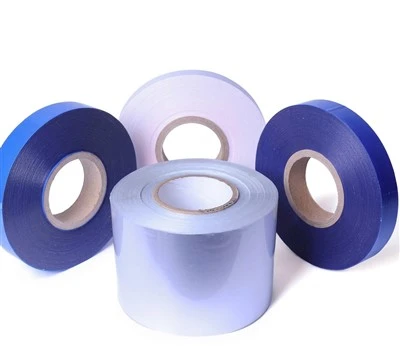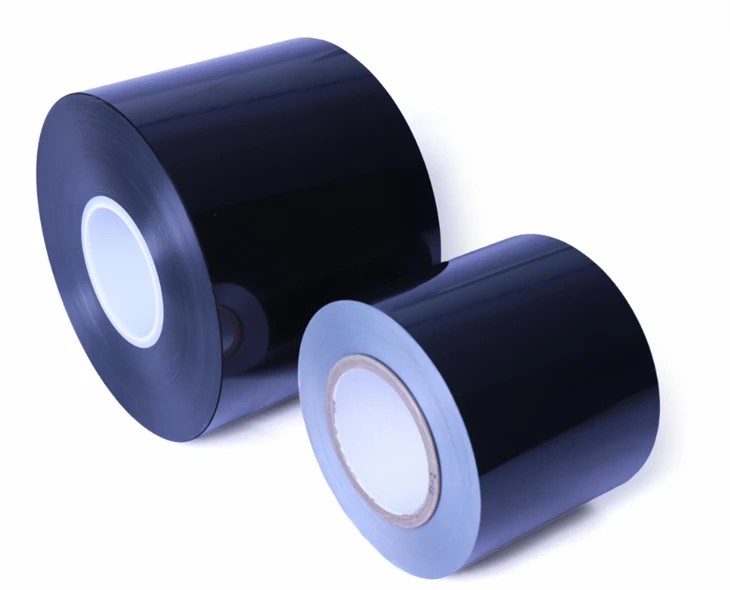
Laminated Busbar Insulation Film
Flame-retardant PET hot melt adhesive film for CCS and laminated busbars in EV battery packs and VFDs. -40 to 125 C, UL94 VTM-0, 85/85 for 1000 h.
- Fast Delievery
- Quality Assurance
- 24/7 Customer Service
Product Introduction
Products Description
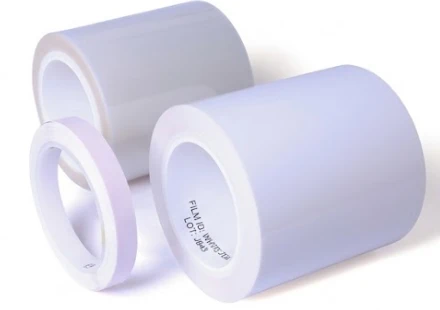
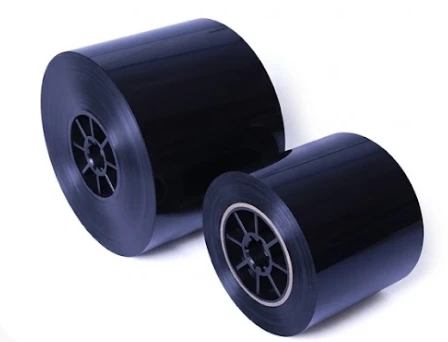
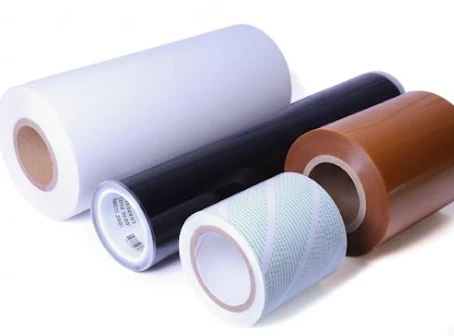
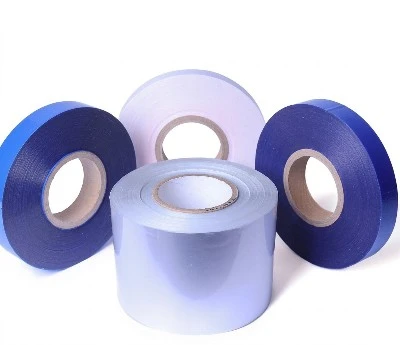
Hot Melt Adhesive Film for Laminated Busbar (CCS) Insulation
In a battery pack, the insulation film on a busbar is not there to keep two parts attached. It is the only thing standing between a 400 V or 800 V conductor and a grounded aluminium tray, and it has to keep standing there for fifteen years of thermal cycling, damp heat and vibration.
This is the material built for that layer: a flame-retardant PET polyester film combined with a polyurethane or epoxy adhesive, laminated onto the busbar by hot pressing to form the integrated cell contact system - the CCS.
Recommend product
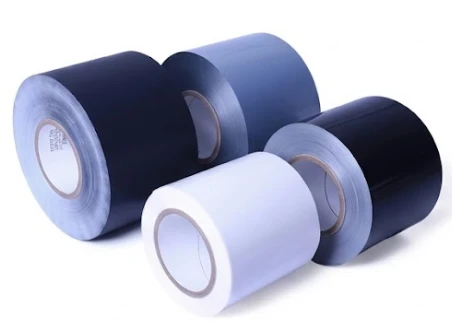
What a CCS is, and where the film sits
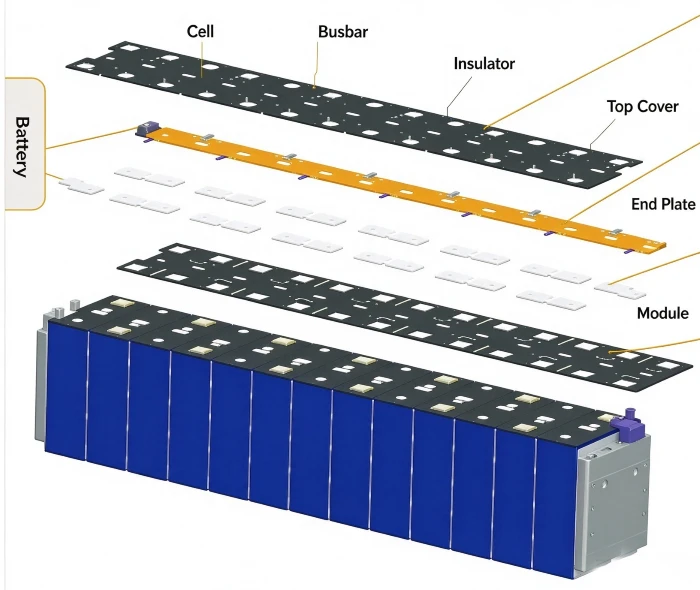
A cell contact system integrates four functions into one laminated part:
The current path - aluminium or copper busbars that carry pack current between cells and modules.
The dielectric barrier - the insulation film laminated onto the busbar, which provides the withstand voltage between conductors, and between conductors and the module structure.
The signal layer - an FPC or wire harness for voltage and temperature sampling.
The mechanical interface - the frame or tray that holds the assembly in place.
The film is the layer that is easiest to treat as a commodity and hardest to recover from when it fails. A delamination at a cut edge, a pinhole at a burr, or an adhesive that flows into a laser weld window does not show up at incoming inspection. It shows up as a hipot failure at end of line, or as a field event.
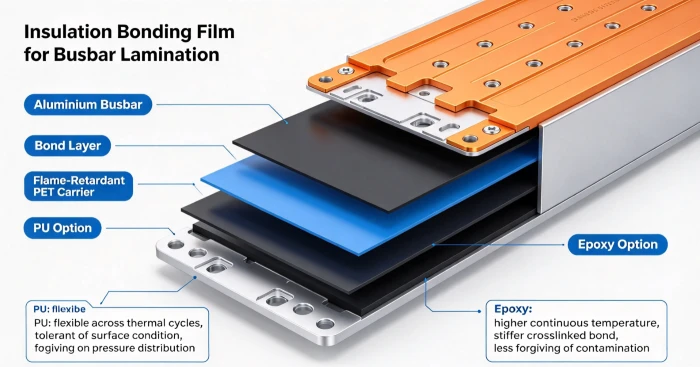
Two chemistry options are available for the bond layer:
| Adhesive | Where it is the better choice |
|---|---|
| Polyurethane (PU) | The general-purpose choice for busbar lamination: flexible across the thermal cycle, tolerant of the surface condition of an aluminium busbar, and forgiving on press pressure distribution. |
| Epoxy | Selected where the finished assembly sees higher continuous temperature or aggressive chemistry and a stiffer, more highly crosslinked bond is wanted. Less forgiving of surface contamination and of pressure variation across a large panel. |
The carrier is a flame-retardant PET polyester film. PET is the reason this product class is affordable and manufacturable at busbar scale: it has the dielectric strength, the mechanical toughness and the supply base. Where a programme needs a higher continuous temperature than PET allows, that is a different carrier discussion, not a thicker film.
Products struture
Specifications
| Property | Value |
|---|---|
| Continuous temperature range | -40 °C to 125 °C |
| Flame rating | UL 94 VTM-0 |
| Damp heat resistance | 85 °C / 85 % RH × 1000 h |
| Carrier | Flame-retardant PET polyester film |
| Adhesive | Polyurethane or epoxy |
| Metal adhesion | High - specified for a firm bond to the busbar; [TBC] N/mm |
Why 85/85 for 1000 hours is the number that matters
A busbar film that passes a dry heat test and fails damp heat is a normal outcome, not an unusual one. PET hydrolyses, and an adhesive bond at a cut edge absorbs moisture faster than the bulk film. Once water reaches the interface, two things happen together: adhesion drops, and insulation resistance falls. In a pack, those combine into a leakage path that shows up as a hipot failure at end of line or as an insulation fault in service.
1000 hours at 85 °C / 85 % RH is long enough to separate a film that is genuinely hydrolytically stable from one that only looks stable in a datasheet. It is also the duration most pack specifications now write into the validation plan, which is why it is quoted here as a qualification result rather than as a marketing number.
VTM-0: what the rating actually covers
UL 94 VTM-0 is the thin-material vertical burn rating - VTM stands for Vertical Thin Material, and it applies to specimens below the thickness threshold for the standard V-0 test. For an insulation film, VTM-0 is the rating that matters, because the test article is a thin film rather than a plaque.
Two practical consequences:
Thickness matters. A VTM rating is issued at a stated thickness. If the production film is thinner than the tested specimen, the rating does not automatically transfer. Confirm the thickness on the certificate against the thickness on your drawing.
VTM-0 is not V-0. A specification that asks for UL 94 V-0 on a 25 µm film is asking for a test that does not apply at that thickness. If your customer's specification says V-0, raise it before tooling - the certificate you will be asked to file is a VTM certificate.
Where it is specified
| Application | What the film is doing there |
|---|---|
| EV battery pack CCS (prismatic and cylindrical modules) | Dielectric barrier on the busbar, plus the bond that holds the sampling layer in place |
| Module-to-pack busbar | Insulation over long conductor runs where the tray is at ground potential |
| Energy storage rack and container busbar | Same dielectric duty, with a longer service life and usually a lower peak temperature |
| Industrial frequency converter laminated busbar | Low-inductance laminated busbar in a VFD, where the film is the dielectric between parallel copper plates |
| Power transmission and distribution equipment | Insulation of laminated conductors in switchgear and converter cabinets |
The two families of application are worth separating. In a battery pack the film is a safety barrier in a sealed, vibration-loaded assembly. In a frequency converter the same film is a dielectric in a high-dv/dt environment, where partial discharge and long-term electrical aging matter more than mechanical cycling. If your programme is the second type, say so at enquiry stage - the thickness and the acceptance tests differ.
Design guidance
Size the film by withstand voltage, not by busbar thickness. The dielectric layer thickness follows the insulation coordination requirement for the system voltage, the pollution degree and the altitude of the application. A 800 V architecture generally demands roughly twice the insulation capability of a 400 V one, and a film selected for a 400 V pack should not be carried over without re-checking.
Treat the cut edge as a design feature. Slitting creates a edge where the film is thinner than nominal in the worst case and where the interface is exposed. Specify an edge margin, and specify whether the film wraps the busbar edge or stops short of it. A wrapped edge is a better moisture barrier; a stopped edge is easier to weld next to.
Protect the weld window. Laser or ultrasonic welding of the busbar tabs requires a clean metal surface. Adhesive that flows into the weld window during lamination is a scrap part, and the flow behaviour is a property of the adhesive, not of the press operator. Define the keep-out zone on the drawing and let the film supplier confirm flow at your press conditions.
Watch the burr. A punched or sheared aluminium busbar has a burr on one side. If the film is laminated over the burr side, the burr concentrates the electric field at a point and can puncture the film during a hipot test or after thermal cycling. Deburr, or laminate on the opposite face, and state which in the drawing.
application

certificate

FAQ
Q: What is the difference between CCS insulation film and CCS signal acquisition film?
A: The insulation film is the dielectric barrier laminated onto the busbar. The signal acquisition film is the bonding material for the FPC or sampling circuit that sits on top of the assembly. They are different products with different electrical requirements, and mixing them up at the enquiry stage is common. If your drawing shows a sampling circuit, you need both.
Q: Can this film replace a PP or PI insulation layer?
A: In many 400 V to 800 V pack applications, yes - PET with a flame-retardant system is the mainstream choice on cost and dielectric performance. PI is used where the continuous temperature exceeds what PET can hold. Substitution in either direction needs a hipot and damp heat re-test on the actual busbar, not just a film datasheet comparison.
Q: Does it pass a hipot test after damp heat?
A: The material is qualified for 85 °C / 85 % RH × 1000 h. Whether your assembly passes hipot after that exposure depends on the busbar geometry, the edge margin and the burr condition as much as on the film. Send the drawing and we will tell you which of those is likely to fail first.
Q: What thickness do I need for an 800 V pack?
A: That depends on the insulation coordination requirement, the pollution degree and the spacing in your module, so there is no single answer. according to you request for the standard thickness range; for a specific system voltage, send the requirement and we will match a thickness to it rather than quote the thickest film available.
Q: Is the adhesive polyurethane or epoxy - can I choose?
A: Both are available, and the choice is usually set by the temperature profile and the chemistry the assembly sees, not by preference. Tell us the continuous temperature and any fluid exposure, and we will recommend one.
Hot Tags: laminated busbar insulation film, China, suppliers, wholesale, buy, price