Fish Paper
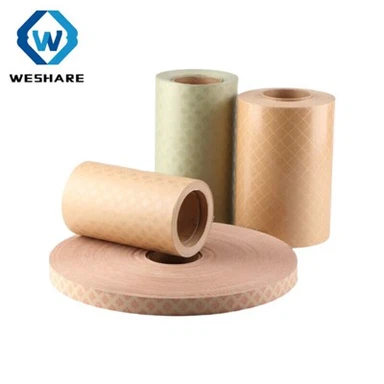
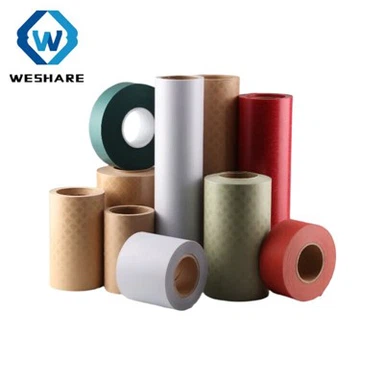
Fish paper, also called green shell paper, is an electrical-grade vulcanized fibre — a dense, rigid insulation paperboard made from cellulose fibre. It is supplied in green or yellow, in roll or sheet form. Fish paper combines high mechanical strength with stable dielectric performance, and can be punched, cut or formed to shape without cracking. It is used for motor and generator slot insulation, gasket insulation, coil end insulation and switchgear, and is the standard choice wherever an insulation part has to be cut or bent to fit.
- Fast Delievery
- Quality Assurance
- 24/7 Customer Service
Product Introduction
Products Description
Fish paper, also known as green shell paper (or yellow shell paper), is an electrical-grade vulcanized fibre: a dense insulation paperboard produced by treating cellulose fibre and calendering it into a homogeneous board. It is not a laminated or coated material - the strength comes from the paperboard itself, which is why fish paper resists tearing, punching and repeated bending in a way that ordinary insulating paper does not.
Fish paper sits between kraft insulating paper and rigid pressboard in the insulation hierarchy. Compared with kraft paper, it is denser, stronger and far more dimensionally stable - it holds its shape when cut into small parts that have to fit a slot or a gasket exactly. Compared with rigid pressboard, it is thinner, more flexible and easier to form into complex shapes. It is supplied in two colours, green and yellow, and in roll or sheet form. Thickness is the main specification variable, and parts are usually punched or die-cut from sheet. At Weshare we supply fish paper to motor, generator and electrical equipment manufacturers. Thickness and density are held to a specification, and sheets are supplied flat-packed to avoid the warping that ruins punching accuracy.

| Technical Parameters | Unit | 0.15 | 0.17 | 0.2 | 0.25 | 0.3 | 0.5 |
| Thickness | mm | 0.15 | 0.17 | 0.2 | 0.25 | 0.3 | 0.5 |
| Thickness tolerance | mm | ±0.02 | ±0.02 | ±0.03 | ±0.03 | ±0.03 | ±0.03 |
| Nominal Quantification | g/m² | 155 | 180 | 210 | 255 | 300 | 600 |
| Nominal film thickness | μm | 25 | 25 | 25 | 25 | 25 | 25 |
| Tensile strength (longitudinal) | N/10mm | ≥100 | ≥110 | ≥120 | ≥120 | ≥150 | ≥150 |
| Tensile strength (transverse direction) | N/10mm | ≥70 | ≥75 | ≥80 | ≥95 | ≥105 | ≥105 |
| Elongation (longitudinal) | % | ≥2 | ≥2 | ≥2 | ≥2 | ≥2 | ≥2 |
| Elongation (transverse direction) | % | ≥8 | ≥8 | ≥8 | ≥8 | ≥8 | ≥8 |
| Breakdown voltage | KV | ≥2 | ≥3 | ≥4 | ≥5 | ≥5.5 | ≥6 |
| Hot bonding 120 ± 2℃ 10Min | No delamination, no bubbles, no glue flow | ||||||
Why Choose Us

Dense, homogeneous board. Fish paper is judged on whether a punched part holds its shape and whether the edge stays clean. We hold thickness and density to a specification, so part dimensions stay consistent from sheet to sheet.
Flat-packed sheet. Warped sheet is the most common complaint on fish paper - it throws off punching registration and produces scrap. Sheets are packed flat, not coiled, to keep them usable on a die-cutting line.
Punching and forming. Fish paper is chosen precisely because it can be die-cut, slit and bent without cracking.We supply the thickness that matches your forming radius, and can advise on the minimum bend radius for each grade.
Consistent supply. Fish paper is a stocked line, not an occasional item, so repeat orders match the previous batch. Free samples of the standard grades are available; the customer covers freight.
application
Motors and generators
Slot insulation between the winding and the stator core; slot wedges and separators; coil end insulation; inter-phase insulation. This is the single most common use of fish paper, and the reason it is specified rather than kraft paper: the part must be punched to a precise shape and must not deform when it is pushed into the slot.
Transformers and switchgear
Insulation washers, spacers, barriers and gaskets in dry-type transformers, current transformers and switchgear. Note the limitation below: fish paper is not suitable for oil-immersed transformers.
Electrical equipment and appliances
Gasket insulation and internal barriers in contactors, relays, motors in appliances, power tools and lighting fittings; arc barriers and terminal insulation.

Where Fish Paper Should Not Be Used
Fish paper is a vulcanized fibre, and vulcanized fibre absorbs oil and moisture. In an oil-immersed transformer this causes the material to swell and its dielectric strength to fall progressively over time. Fish paper is therefore not recommended for oil-immersed transformer applications. For oil-immersed duty, specify kraft insulating paper or oil-compatible pressboard instead. If you are not sure which applies to your design, send us the application and we will tell you which material is correct - including when the answer is not this one.
How to Choose Between Fish Paper and Composite Insulation Paper
| Fish Paper (Vulcanized Fibre) | DMD / DDP Composite Paper | Kraft Insulating Paper | |
|---|---|---|---|
| Structure | Dense cellulose board, no film | Insulation paper + polyester film laminate | Plain cellulose paper |
| Film layer | None | Yes (typically 25 μm) | None |
| Key property | Mechanical strength, punchability, formability | Combined electrical + mechanical, higher dielectric strength | Low cost, oil compatible |
| Best for | Motor slot insulation, gaskets, punched parts | Transformer and motor inter-layer insulation where higher dielectric strength is needed | Oil-immersed transformers, layer insulation |
| Oil-immersed duty | Not recommended | Depends on construction | Yes |
| Choose it when | The part must be cut or bent to shape and must hold its shape | You need higher dielectric strength in a thin profile | You need oil compatibility or lowest cost |
FAQ
Q: What is fish paper made of?
Fish paper, also called green or yellow shell paper, is an electrical-grade vulcanized fibre made from cellulose fibre. It is a dense, homogeneous paperboard rather than a coated or laminated material - there is no film layer.
Q: Why is it called fish paper?
The name is a historical trade nickname for electrical-grade vulcanized fibre and has nothing to do with fish. In China it is commonly called green shell paper or yellow shell paper, after the two colours it is supplied in.
Q: What is the difference between fish paper and DMD or DDP insulation paper?
Fish paper is a solid vulcanized fibre board with no film layer; its main value is mechanical strength and the ability to be punched and formed. DMD and DDP are composite materials made by bonding insulation paper to a polyester film, and are chosen when higher dielectric strength is needed in a thin profile. They are different materials for different jobs - see the comparison table above.
Q: Can fish paper be used in oil-immersed transformers?
No. Vulcanized fibre absorbs oil and moisture, which causes swelling and a progressive loss of dielectric strength. For oil-immersed transformers specify kraft insulating paper or an oil-compatible pressboard instead.
Q: Can the thickness be customized?
Our standard thicknesses are 0.15-0.5 mm and are held in stock. Other thicknesses can be produced to order - send your specification and quantity.
Q: Is fish paper available in sheet or in roll?
Both. Most customers buy punched-part stock as flat sheet; roll form is available where the material will be slit or fed into a continuous process. State which your line uses.
Q: Do you provide free samples?
Yes, free samples of the standard grades are available. The customer covers the freight cost.
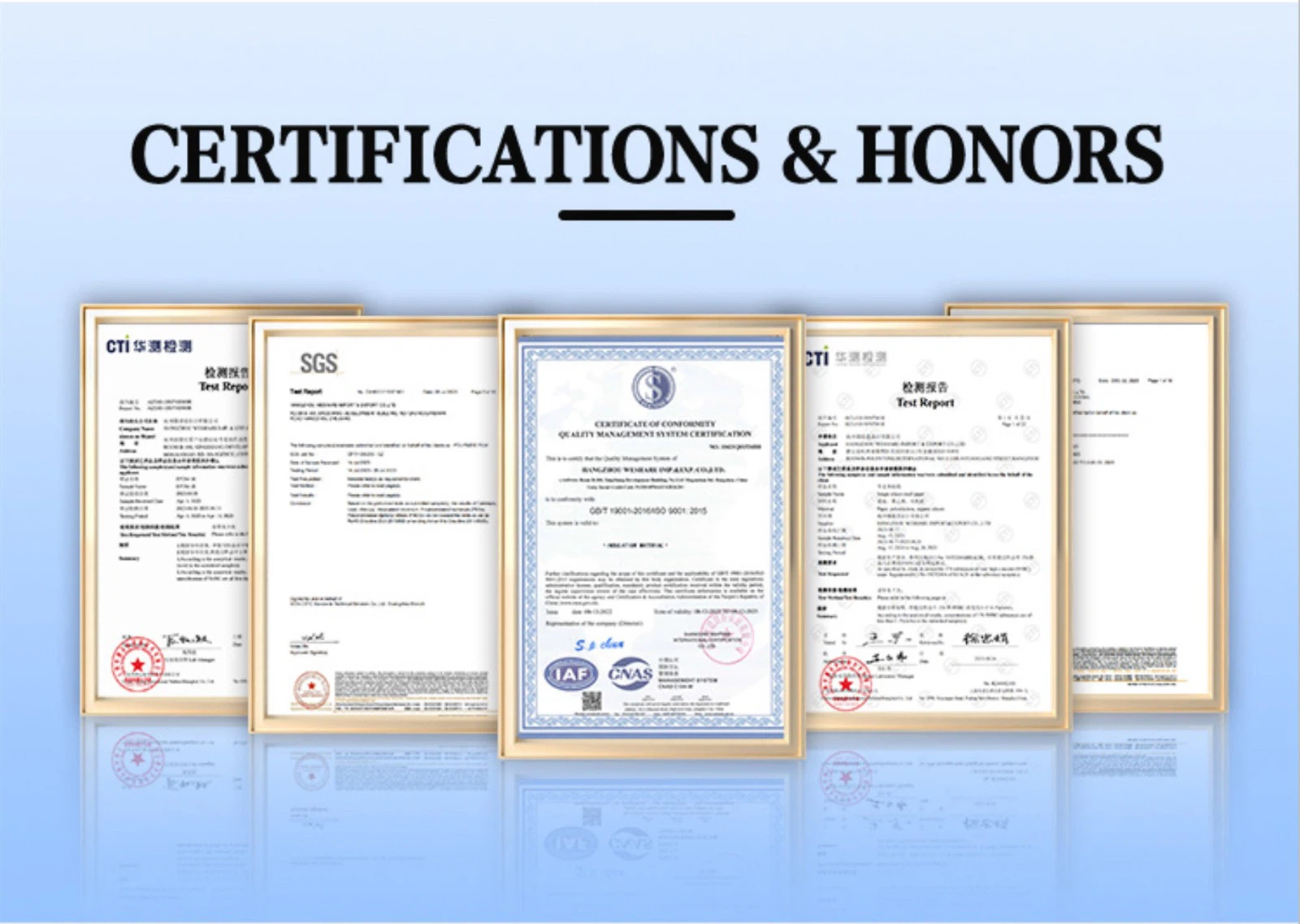
our certificate
Hot Tags: fish paper, China, suppliers, wholesale, buy, price