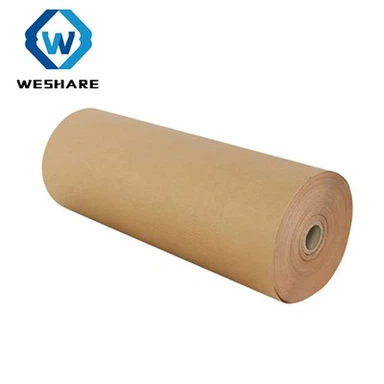
Diesel Fuel Filter Paper
High-quality cellulose fuel filter media with environmentally friendly resin bonding, available in single, double and multi-layer construction for the exact micron rating diesel and gasoline systems require.
- Fast Delievery
- Quality Assurance
- 24/7 Customer Service
Product Introduction

Cellulose Fuel Filter Media for Diesel and Gasoline Filtration (diesel fuel filter paper)
Fuel is not clean. Diesel delivered to a mine site in West Africa, to a generator in Indonesia, or to a filling station in a market with limited downstream quality control carries organic and inorganic contaminants that a modern high-pressure injection system cannot tolerate. On common-rail diesel, injector clearances are measured in single microns and injection pressures exceed 2,000 bar. A particle that passes the filter does not cause a slow efficiency loss; it erodes a nozzle seat.
The problem is that many contaminants in real-world fuel have a low micron rating, and a basic filter media will not protect the machinery behind it. That is the design premise of this range: contaminants are finer than the nominal rating suggests, so the media has to be built to a pore structure that actually removes them, at a cost the filter market will bear.
The cost–protection compromise, stated honestly
There is no media that is simultaneously the cheapest and the finest. Our position is to make the compromise explicit and selectable rather than hidden.
Fibre base runs from 100% cellulose to 100% fine fibre, with blends in between. Cellulose gives stiffness, form stability and low cost; fine fibre gives tighter pore structure and higher efficiency at the same basis weight.
Construction is available in single, double and multi-layer builds. Each additional layer buys a step of protection: a single layer is one pore structure, while a double or multi-layer build can combine a coarse upstream structure for capacity with a fine downstream structure for efficiency. That is how you deliver the exact degree of protection an injection system requires without paying for pore size you do not need.
Resin system uses high-quality fibre raw materials bonded with environmentally friendly resins. The resin is what gives the sheet its stiffness in a fuel-wet element and its resistance to swelling and delamination over service life.
Applications
Diesel fuel filters: pre-filter, primary and secondary stages on trucks, buses, gensets, agricultural and construction machinery
Gasoline filters for passenger cars and small engines
Fuel dispensing and transfer filtration
Marine fuel systems where fuel quality varies by port
Stationary engine and boiler fuel lines
Converting and supply format
Rolls, slit to pleater width; corrugation at 0.25 mm standard for this range.
Single, double and multi-layer builds are supplied as a finished laminate, so the converter pleats one sheet rather than assembling layers in-house.
Resin system selected for the customer's fuel type and expected water exposure.
Consistent thickness control - layer count and total thickness must hold, or end-cap sealing and pleat height drift.
Grade data
| rade | Basis weight (g/m²) | Thickness (mm) | Corrugation depth (mm) | Air permeability @200 Pa (L/m²·s) | Max pore size (µm) |
|---|---|---|---|---|---|
| HTC3200 | 200 | 0.70 | 0.25 | 88 | 50 |
| HTC1137 | 137 | 0.52 | 0.25 | 110 | 60 |
| HTC3180 | 170 | 0.64 | 0.25 | 80 | 55 |
| HTC2150 | 150 | 0.58 | 0.25 | 175 | 65 |
Grade selection
HTC3200 - the densest grade: 200 g/m², 0.70 mm, 88 L/m²·s, 50 µm. Specify it for high-pressure common-rail primary filtration and for fuel systems where the injector protection requirement outweighs the restriction budget.
HTC3180 - the fine mid-weight grade. 170 g/m², 80 L/m²·s, 55 µm. A close alternative to HTC3200 with slightly lower restriction; useful where the pump's suction capacity is the limiting factor.
HTC1137 - the thin, economical grade. 137 g/m² at 0.52 mm, 110 L/m²·s, 60 µm. Suited to pre-filter stages, gasoline carburettor and low-pressure injection systems, and cost-driven aftermarket volumes.
HTC2150 - the high-flow grade. 175 L/m²·s at 150 g/m² with a 65 µm pore. Use it where flow rate dominates - large engines, high-flow filter housings, and as the upstream layer in a multi-layer build.

Stiffness is a fuel-media requirement, not a nicety
A fuel element works wet, under pressure pulsation, and often in a housing that flexes with temperature. A soft sheet collapses pleats, closes the flow path, and can migrate fibres downstream. The reason this range emphasises high-quality fibre raw materials and a proper resin bond is that stiffness in the wet state is the property that separates a media that survives 500 hours from one that survives 5,000.
Our factory pictures




Production line show


FAQ
Why does the brochure list air permeability for a fuel filter media?
Air permeability is a fast, repeatable proxy for pore structure and a practical incoming-inspection value. It is measured on the dry sheet, so a converter can verify consistency without running a full fuel bench test.
Single layer or multi-layer - how do I choose?
Single layer if one pore structure meets the target rating and the cost target. Multi-layer if you need capacity and efficiency at the same time: a coarser upstream layer holds the load, a finer downstream layer does the final capture.
Can you match a competitor's micron rating?
Send the rating, the test method and the element dimensions. Ratings are not comparable across methods, so we match on pore structure and permeability, then confirm against your bench result.
Is the resin genuinely environmentally friendly or is that marketing?
It refers to the resin system chemistry we specify for the bonding stage. If you have a restricted-substance list for your market, send it and we will confirm compliance for the specific grade.
What about water in the fuel?
This range is built for particulate removal and structural stability.
Hot Tags: diesel fuel filter paper, China, suppliers, wholesale, buy, price