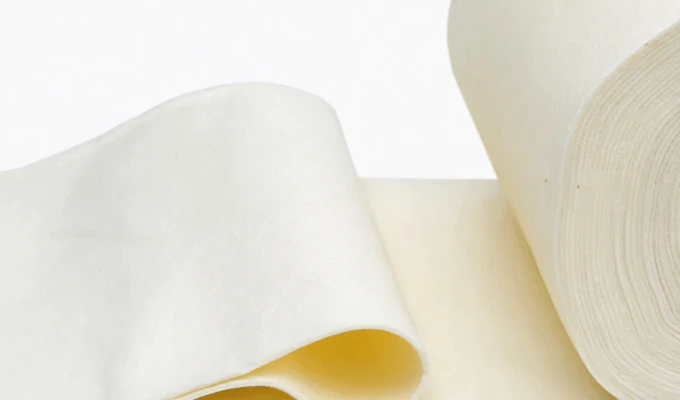

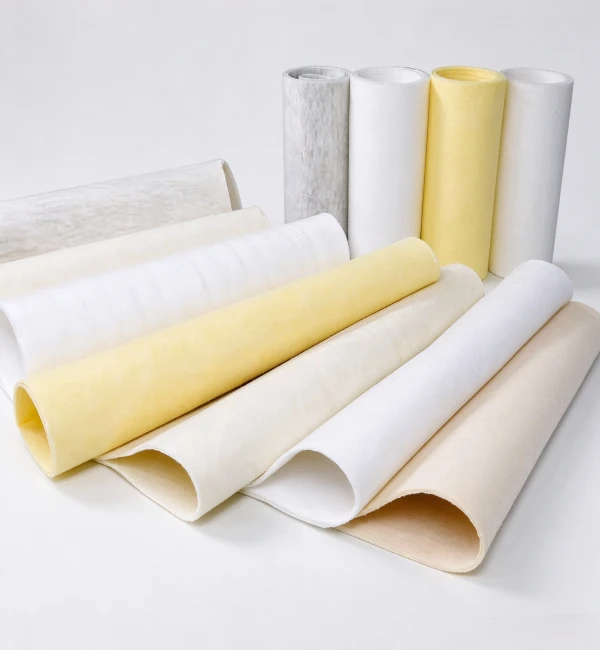
Laminated Filter Media For Fuel And Water Separation
Multi-layer laminated filter media for fuel and water separation, combining meltblown, ultrasonic, thermal and hot-melt bonding for full-life emulsified water removal and 99.9% particle efficiency at 4 µm
- Fast Delievery
- Quality Assurance
- 24/7 Customer Service
Product Introduction
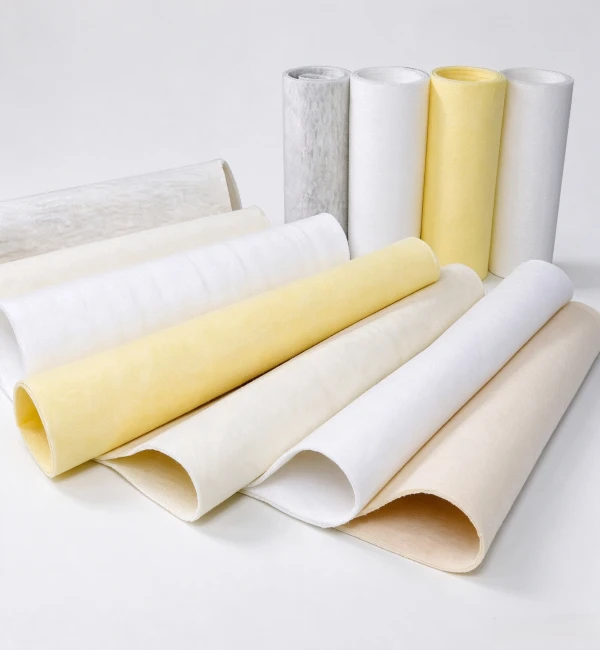
Laminated Filter Media for Fuel and Water Separation
Water in diesel is a more expensive problem than particulate in diesel, and it is harder to solve. A particle is removed by size exclusion. Water arrives in two forms, and only one of them is easy.
Free water - droplets large enough to settle - is handled by gravity and a drain. Emulsified water is dispersed in the fuel at droplet sizes that will pass straight through a conventional filter's pores. It travels to the high-pressure pump and the injectors, where it flashes, cavitates, corrodes nozzle seats and, in winter, forms ice. Modern emission control standards have tightened the requirement further: fuel systems designed to Euro VI and equivalent standards specify water separation over the full service life of the element, not just at commissioning.
This product exists for that requirement. It is a laminated, multi-layer media in which the layers are engineered for different jobs: coalescing the emulsion into droplets large enough to be separated, then repelling the separated water so it drains rather than re-entraining.
How the coalescence works
A coalescing medium does not filter water out by pore size. It presents a fibre structure with controlled surface energy in which sub-micron water droplets attach, grow and release. Three things have to be true at once:
The upstream structure must capture droplets small enough to be a threat - this is the fine-fibre and meltblown function.
The captured droplets must be able to migrate and merge, which requires a graded structure rather than a uniform one.
The downstream surface must shed the coalesced water, or the element re-entrains it and the separation figure collapses at high flow.
That is why a single-layer sheet cannot do this job, and why the range is built as a laminate.
The four bonding technologies
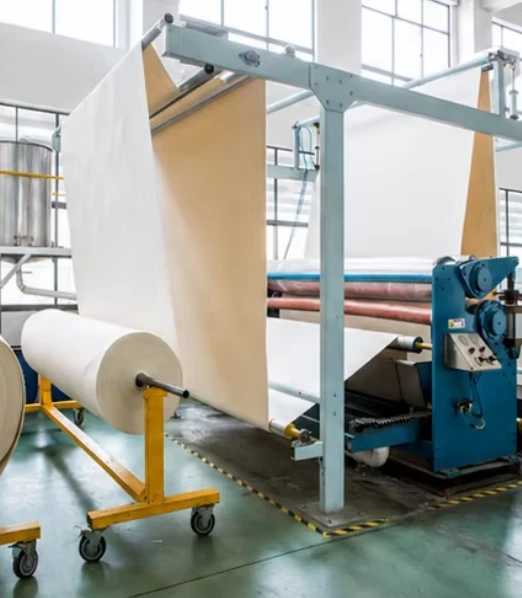
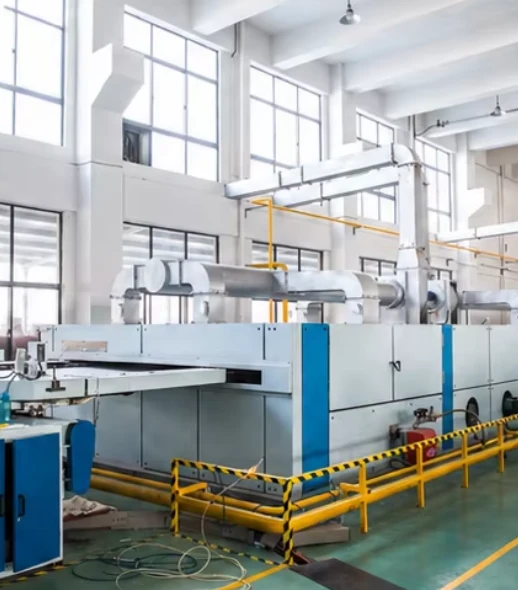
We integrate meltblown, ultrasonic, thermal and hot-melt bonding capabilities. These are not interchangeable - each gives a different laminate:
Meltblown adds a fine-fibre layer with very high surface area. This is the layer that captures the sub-micron soot and emulsion droplets that a wet-laid sheet cannot reach.
Ultrasonic bonding joins layers at discrete points without melting the functional layer. It preserves permeability and coalescing behaviour at the bond sites.
Thermal bonding gives a continuous, strong bond where mechanical durability and pleat support matter more than maximum openness.
Hot-melt bonding is the flexible option for dissimilar layers and for short runs where tooling cost dominates.
The result is a set of laminated products with differentiated performance on three axes: long service life, full-life emulsified water separation, and chemical durability against the additive packages and biodiesel blends in modern fuel.
Grade data
The efficiency column below is average efficiency at 4 µm to ISO 19438, i.e. measured on a particle-counting bench rather than inferred from pore size. It is the single most useful number in this group, because two grades with similar basis weight can differ by a factor of three in efficiency.
| Grade | Basis weight (g/m²) | Thickness (mm) | Corrugation depth (mm) | Air permeability @200 Pa (L/m²·s) | Max pore size (µm) | Avg. efficiency ISO 19438 @4 µm (%) |
|---|---|---|---|---|---|---|
| HTLM3051 | 280 | 1.05 | 0.20 | 20 | 26 | 99.9 |
| HTLM351 | 280 | 0.85 | 0.20 | 25 | 25 | 99.3 |
| HTLM8501 | 290 | 1.10 | 0.20 | 35 | 25 | 99.5 |
| HTLM8101 | 300 | 0.85 | - | 35 | 22 | 99.9 |
| HTYS3052 | 266 | 0.96 | 0.20 | 34 | 35 | 64.0 |
| HTYS3054 | 250 | 1.00 | 0.20 | 160 | 50 | 30.6 |
| HTLM310 | 216 | 0.50 | - | 29 | 28 | 81.5 |
| HTLM6011-5 | 300 | 0.95 | - | 90 | 40 | 62.1 |
| HTLM8066 | 220 | 0.90 | - | 160 | 38 | 60.5 |
| HTLM8070 | 226 | 0.90 | - | 123 | 32 | 83.9 |
| HTLM8080-1 | 270 | 0.98 | 0.20 | 120 | 56 | 74.8 |
| HTYS300 | 215 | 0.75 | 0.20 | 80 | 38 | 69.3 |
| HTYS3001 | 280 | 0.96 | 0.20 | 14 | 22 | 96.8 |
| HTYS3006 | 205 | 0.80 | 0.20 | 15 | 26 | 87.2 |
| HTYS3008 | 215 | 0.85 | 0.20 | 200 | 70 | 54.1 |
| HTLM1770 | 199 | 0.78 | 0.20 | 310 | 54 | 57.5 |
| HTLM8106 | 288 | 0.83 | - | 125 | 34 | 60.3 |
How to navigate seventeen grades without a mistake
Read the table by requirement, not by grade name:
Highest particle efficiency (>99%): HTLM3051, HTLM8101, HTLM8501, HTLM351. These are the grades for final-stage fuel filtration on common-rail systems where 4 µm particle count is the acceptance criterion. Note that HTLM3051 and HTLM8101 reach 99.9% at very different thicknesses (1.05 mm vs 0.85 mm) and different pore sizes (26 vs 22 µm) - choose on pleat height and housing volume, not on efficiency alone, since both are effectively at the ceiling.
High efficiency with more flow (85–97%): HTYS3001 (96.8% at only 14 L/m²·s - a tight, low-permeability sheet for small high-precision elements), HTYS3006 (87.2%), HTLM8070 (83.9%), HTLM310 (81.5%). These are the practical middle: strong capture with a permeability that allows a smaller element or a higher flow per unit area.
Moderate efficiency, high flow (54–75%): HTLM8080-1, HTYS300, HTLM6011-5, HTLM8066, HTLM8106, HTLM1770, HTYS3008. Use these as pre-filter or coalescing stages ahead of a fine final stage - HTLM1770 at 310 L/m²·s is the most open sheet in the group and belongs upstream, not last.
Capacity-oriented (30–64%): HTYS3054, HTYS3052, HTLM6011-5. Deliberately open for high dirt-holding in the first stage, or for applications where water separation rather than particle count is the governing requirement.
A pairing example. A two-stage diesel system might use HTLM1770 or HTYS3054 as the coalescing/capacity stage and HTLM3051 as the final stage. The first stage takes the load and starts the coalescence; the second delivers the 4 µm count and the final water barrier. Running HTLM3051 alone in a high-dirt application loads it prematurely; running HTYS3054 alone passes the fine fraction.
Applications
Diesel fuel-water separator elements on trucks, buses and heavy equipment
Common-rail fuel filter modules requiring full-life water separation
Marine fuel systems and bunker fuel polishing
Generator set fuel lines in high-humidity and tropical markets
Aviation ground fuel handling where coalescing is specified
Any element built to an emission control standard that specifies emulsified water removal
Customisation
The layer stack is the product. We tailor new laminated fuel filtration materials to a customer's requirement rather than only selling the listed builds: layer order, layer count, bonding method, and the balance between capacity and efficiency can all be set. Where a customer has an existing element drawing and a failing bench result, the usual route is to rebuild the stack against the failure mode - premature loading points to more upstream capacity, while a failed water-separation figure points to the downstream surface, not the pore size.
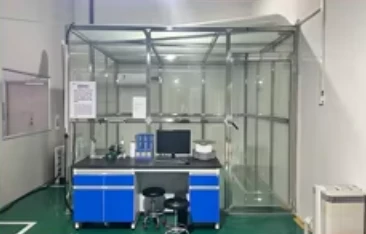
Our factory pictures



FAQ
What does "full life" water separation mean?
That the separation performance holds to the end of the service interval, not only on a new element. Many media separate water well when clean and lose that ability as they load, because the coalescing surface becomes covered. Our laminate is designed against that decay curve.
Why is efficiency quoted at 4 µm rather than at a nominal rating?
Because nominal ratings are not comparable between suppliers and say little about the fine fraction that damages high-pressure fuel systems. ISO 19438 at 4 µm is a measured, repeatable figure.
Can this media handle biodiesel blends?
Chemical durability against additive packages and fuel blends is a stated design objective of the laminate. Send the blend ratio and we will confirm the specific grade.
Does higher efficiency always mean lower flow?
Not linearly. Compare HTYS3001 (96.8% at 14 L/m²·s) with HTLM8101 (99.9% at 35 L/m²·s) - the second is both more efficient and more permeable, because it is a thicker, differently bonded laminate. This is exactly why the grade should be selected from measured data, not from the efficiency number alone.
Can you bond our existing layers instead of supplying a finished laminate?
Yes. Bonding capability covers meltblown, ultrasonic, thermal and hot-melt, so a customer-supplied layer stack can be laminated to specification.
Hot Tags: laminated filter media for fuel and water separation, China, suppliers, wholesale, buy, price